
Moving to a fresh house usually feels like a total whirlwind of cardboard boxes, messy logistics, and a non-stop race against the clock. In a high-speed place like Qatar, your AC is not just another machine. It is probably one of the most essential and pricey things you will need to shift. If you are getting ready to start moving AC units, you cannot just unbolt the hardware and expect everything to go smoothly.
Without a real professional plan, you are looking at expensive gas leaks, a dead compressor, or moisture totally ruining those sensitive cooling lines. Learn how moving AC units safely with proper pump down procedures prevents damage before it ever happens.
When you see how much the HVAC world is growing, it is clear the stakes are pretty high. Recent market data shows that the global air conditioning market is on track to hit a valuation of roughly $190 to $ 200 billion by 2026, largely due to rising temperatures and a massive demand for professional relocation services.
Ensuring your unit survives the truck ride is not just about staying cool, but it is a major move to protect your wallet. This is exactly why more households are turning to dedicated AC Relocation Services instead of attempting the move alone.
Why the “Pump Down” Method is Vital
The secret to moving an AC successfully is a technical maneuver called the “pump down.” This process involves trapping all the refrigerant, the actual gas that makes things cold, safely inside the outdoor condenser before any pipes are disconnected. This is truly the only way to uninstall split AC systems without spraying gas into the air, which is terrible for the environment and very pricey to refill later. Done correctly, this method protects refrigerant from ever escaping into the atmosphere.
When a pro performs a pump down, they are essentially forcing the compressor to “pull” the gas back into its home base. By tightening the liquid line valve while the machine is still humming, the compressor sucks every bit of gas back from the indoor coils and copper tubing.
Once the pressure reaches that ideal level, you seal the suction valve to trap the refrigerant safely inside the outdoor unit. This ensures that once the copper lines are finally uncoupled, you will not hear the painful “hiss” of expensive gas escaping.
The Risks of Improper Installation
If you skip the pump down or rush the setup at your new place, you are not just losing a bit of gas, but you are inviting a total system failure. Once the lines are opened to the air, humidity creeps in. In the damp coastal air common in Qatar, even five minutes of exposure can introduce moisture that turns compressor oil into a nasty, corrosive acid.
- Acidic Damage:
Moisture mixing with oil creates a sludge that eats through motor windings from the inside out.
- Compressor Burnout:
Running a machine with contaminated gas usually leads to an instant mechanical seize-up.
- Pressure Spikes:
When you need the system most, trapped air bubbles cause it to overheat and shut down.
- Efficiency Loss:
Your unit will work twice as hard to cool half as well, which leads to massive spikes in your power bills.
- Legal Fines:
In many areas, intentionally releasing refrigerant is a serious offense that carries severe consequences.
Professional safe AC transport starts with keeping the internal chemistry of your machine clean and pressurized from the moment it is uninstalled until it is running again. One of the most frequent reasons people need AC Repair Services in Qatar soon after moving is because they neglect this procedure.
Step-by-Step Guide to a Professional Pump Down
Technicians follow a highly specific order of operations that calls for a steady hand and the appropriate equipment to keep your machine in optimal condition. To correctly uninstall split AC units, the process must be methodical.
Preparing the Tools
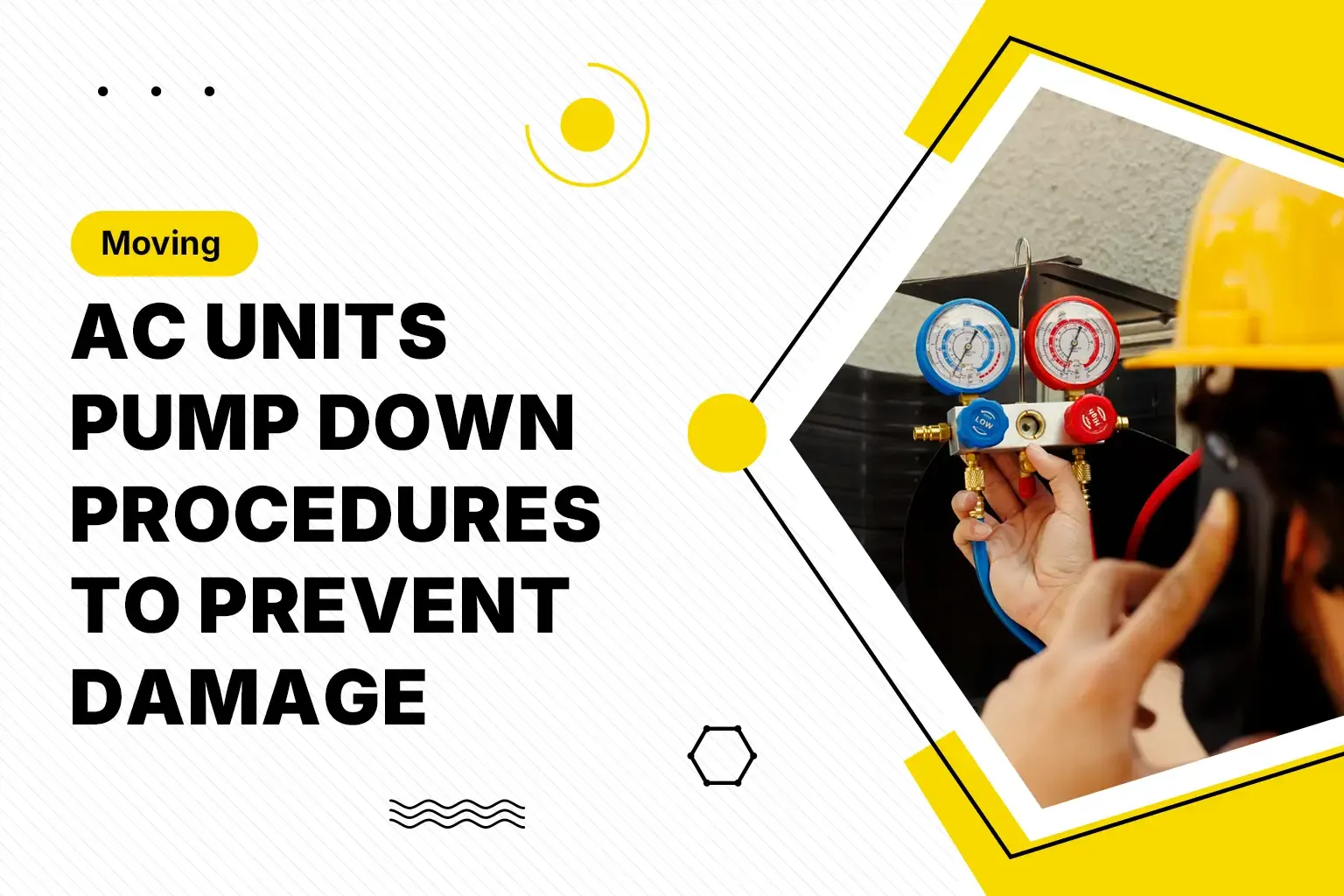
Before things get started, a technician pulls out a manifold gauge set, hex keys, and adjustable wrenches. You cannot judge a pump down by “guessing” or timing it with a watch.
One of the most useful AC technician tips is to always use a physical pressure gauge to see exactly when the vacuum is hit, making sure no gas is left behind in the copper. This same level of preparation is standard across professional AC Installation Services.
Shutting the Discharge Valve
The technician gently removes the service valve covers after adjusting the air conditioner to its lowest temperature. They then use a hex key to tightly shut the small valve, known as the liquid line.
This stops the flow of gas to the indoor unit but keeps the compressor running, allowing it to draw everything back from the indoor side.
Monitoring the Pressure
As the compressor keeps humming, the gauge needle will start to drop toward the zero mark. This signals that the gas is safely moving into the condenser.
In the intense Qatari heat, this process happens quickly, so the tech must act the second the needle drops to keep the compressor from running dry.
Sealing the System
The final move of the pump down is closing the large suction valve and immediately cutting the power. This keeps the gas contained for an extended period.
The compressor may overheat or blow a seal if power is left on for even a second after the valve is sealed. Because of this level of accuracy, moving air conditioners is not a task for a do-it-yourself weekend warrior.
Read Also:
- Shared Accommodation in Doha: 5 Proven Tips for Staff Housing
- Get High-Quality Commercial Furniture Supplies in Qatar
- Hidden Water Leaks: Signs Your Pipes Are Leaking Inside Walls in Qatar
Preparing for safe AC transport
Once the gas is locked away, the heavy lifting begins. This stage is where many units get “silent” damage, like bent fins or loose wires that you would not notice until you try to turn it back on.
Disconnecting the Copper Pipes
After the pump down is done, the copper lines are disconnected. It is vital to seal the ends of these pipes and the ports on the unit immediately with brass caps or heavy-duty tape.
This keeps dust, bugs, and humidity out of the system during the move. In the sandy environment of Qatar, a single grain of sand in a line can clog a valve and kill the unit’s cooling power instantly. This is also a good time to schedule AC Duct Cleaning Services in Qatar so the whole system starts fresh at the new house.
Handling the Outdoor Condenser
The outdoor unit is the heaviest yet most delicate component. It has to stay upright, as laying it sideways to save space lets compressor oil leak into the cooling coils.
If that oil is not in the sump when you restart it, the compressor will grind itself to pieces in minutes. While the unit is disconnected, it is also worth considering the Coil Cleaning Benefits of giving the condenser a proper clean before reinstalling it.
Protecting the Indoor Unit
The indoor head unit houses the “brain” of the AC and the water drainage tray. Make sure the hose is completely empty of water before packing it. If water seeps onto the circuit board while you are driving, it will short out as soon as you plug it in.
An essential component of safe AC transportation on uneven roads is wrapping the unit in thick bubble wrap.
Reinstallation: The Second Half of the Move
Moving the unit is only part of the process. How it gets put back together at the new house determines if it will last another decade or die by next week.
A careful pump down at the old location ensures efficient reinstallation at the new one, so the system runs exactly as it did before the move.
Vacuuming the Lines
When the AC is set up at the new place, a tech must use a vacuum pump to “suck out” the lines before letting the gas back in. This eliminates any moisture or air that may have entered during the relocation. To ensure the air conditioner in Qatar can withstand a 50-degree hot day without triggering the high-pressure switch, a deep vacuum is necessary.
Checking for Leaks
The continuous rattling of a moving vehicle can occasionally cause tiny fractures in the copper joints, even if everything is handled carefully. A real expert will always perform a thorough leak test using soapy water or a digital sensor before they consider the job finished.
Following these AC technician tips prevents that slow leak that usually results in the AC blowing warm air just a few months later. This last check is worth the extra few minutes because a hurried reinstallation might also result in AC noise problems.
Why Professional Help Matters: Adonai Solutions
It is tempting to try and save a few bucks by doing the job yourself, but the complexity of modern gases like R410A makes it risky. In Qatar, where a working AC is a survival tool rather than a luxury, you need people who know the local climate.
Adonai Solutions has earned a name as the expert for cooling needs in the region. Whether you are moving across a neighborhood in Doha or shifting your whole office, their team handles the pump down and setup with total precision.
By calling Adonai Solutions, you are not only just hiring movers, but also you are getting specialists who treat your AC like the high-tech machine it actually is. It is always better to have an expert uninstall split AC units to avoid long-term damage. Their team also offers full AC Installation Services for anyone setting up a unit at a brand-new property.
Local Expertise in Qatar
The weather in Qatar creates some very specific problems for air conditioners. The mix of extreme heat and fine sand means a basic “unplug and move” is not enough. You need a crew that knows how to clean the coils during the move and make sure the brackets are anchored against the desert winds.
Adonai Solutions knows these local quirks very well. They make sure every part of moving AC units, from the first valve turn to the final temperature check, meets the highest standards.
Their work helps people avoid the common headaches of moving, ensuring your first night in the new house is actually comfortable. For units that have collected dust over the years, pairing the move with an AC Deep Cleaning Service in Doha is a great way to start fresh.
Final Checklist for moving AC units
- Verify the Gauge: Ensure that the technician checks the vacuum using a manifold gauge.
- Plug the Holes: When transporting copper pipes, never leave them exposed to the air.
- Keep it Upright: To safeguard the compressor oil, the outdoor unit must remain upright.
- The 20-Minute Rule: Before releasing the gas, the vacuum pump must run for at least 20 minutes.
- Call the Pros: To complete the task correctly, use a local specialist like Adonai Solutions.
Taking these small steps ensures your AC stays a reliable friend through many more Qatari summers. A little technical care today prevents a huge repair bill tomorrow. Regular AC maintenance services in Doha can further extend that reliability well beyond the first summer in your new home.
Conclusion
Moving is actually a perfect time to give your air conditioner a fresh start. By using the right pump-down methods, you save the massive cost of a gas recharge and add years to your compressor’s lifespan. Remember, a split AC is a closed-loop system. If you break that loop without being careful, you risk serious problems.
If you are planning a move soon, do not leave your comfort to luck. Contact Adonai Solutions’ professionals to manage the technical details and heavy lifting. Their expert approach ensures that your unit remains in excellent condition, allowing you to concentrate on all other aspects of your major relocation.
Long after the boxes are unpacked, the unit will continue to function properly if you combine your relocation with Annual AC Maintenance Services in Doha.
Move Your AC Units Safely with Expert Pump Down Services
Planning to relocate your AC system? Our professionals use proper pump down procedures to protect your unit, prevent damage, and ensure efficient reinstallation.
Frequently Asked Questions
Is it possible to move an AC unit?
Indeed, you can get your AC moved to a different location. You will need a professional “pump down” method to save the refrigerant. Professionals like Adonai Solutions ensure that moving AC units is done without losing gas or damaging the internal components.
Can we uninstall the split AC?
Yes, you can uninstall a split AC, but you will need specialized tools to seal the lines. Ensure that all technical steps are meticulously followed. Failing to do so can lead to moisture contamination, which can damage the compressor.
How do I uninstall an AC unit?
For a window unit, you can start by unplugging the unit, detaching side panels, and sliding it off the frame. Make sure the AC is upright while you are doing so. If it is a split AC, the “pump down” method is necessary to lock the refrigerant. To properly uninstall split AC units, always cap the lines immediately to keep out dust and moisture.
How much time does it take to uninstall AC?
A standard professional removal usually takes about 30 to 60 minutes depending on the accessibility of the units. Technicians focusing on safe AC transport will take the extra time to ensure the pump down is perfect.
How to transport an AC from one place to another?
Keep the condenser upright. Drain the water and pack it securely using styrofoam and thermocol. Pack it well to ensure safe AC transport across bumpy roads or high-speed urban areas.
What is the 3-minute rule for air conditioners?
This rule prevents the compressor from short-cycling by ensuring it stays off for at least three minutes before restarting. This delay protects the motor from high-pressure stress, which is a vital tip for moving AC units and testing them after reinstallation.