
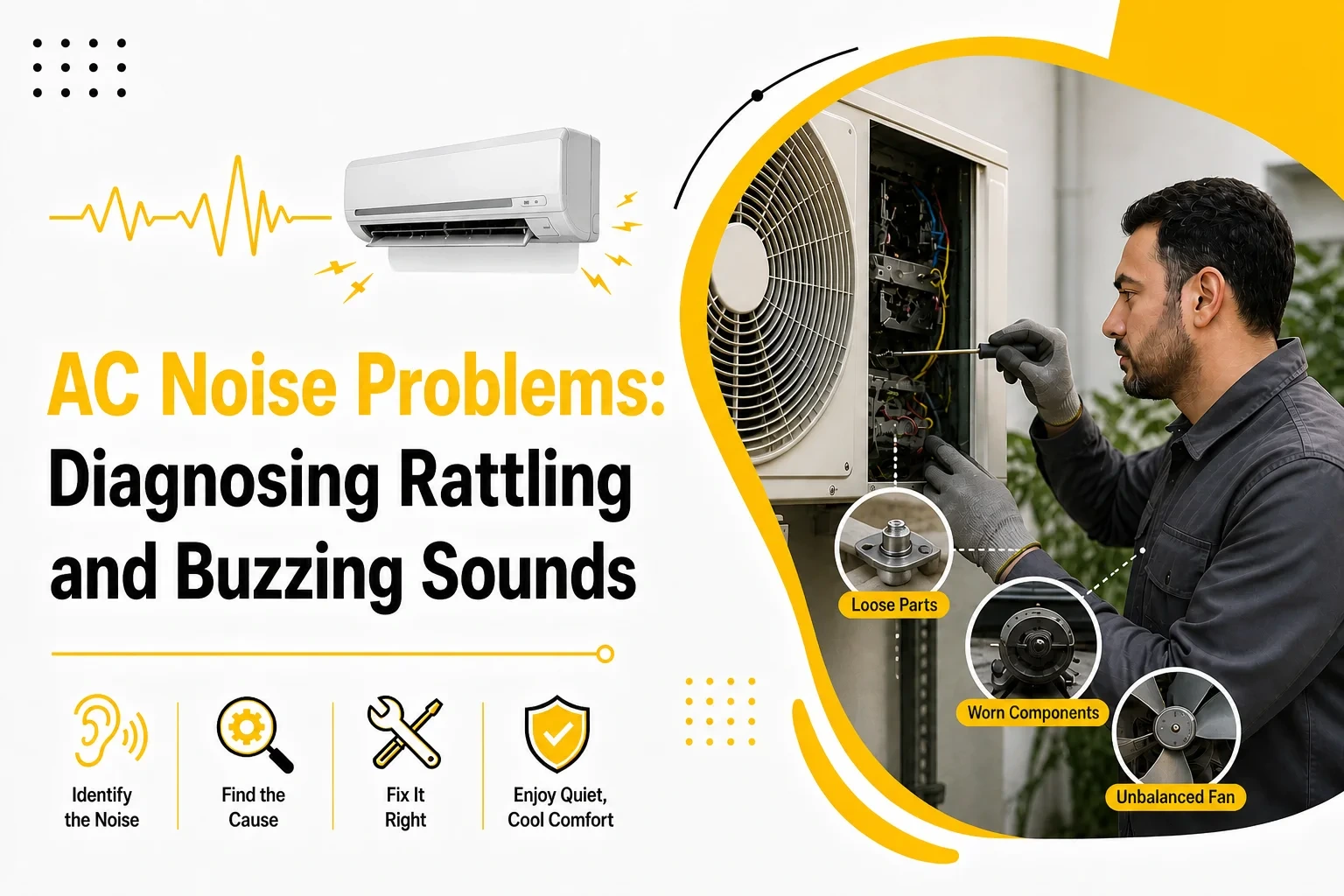
Is your cooling unit currently making more racket than a Doha construction crew? Amid the intense summer of 2026 in Qatar, a silent air conditioner is a primary indicator of mechanical health, not just a minor comfort. When your system begins emitting odd sounds, it’s essentially sending a distress signal.
Recent industry data for 2026 reveals that roughly 22% of HVAC service calls are industry-wide callbacks often triggered by weird sounds and incomplete diagnostics before a total system death. Furthermore, with nearly 70% of household energy in the Gulf going toward cooling, a loud unit isn’t just noisy; it’s a drain on your wallet. Dealing with AC noise problems early can prevent you from being stuck in the heat with a broken unit.
Why You Can’t Ignore a Loud Air Conditioner
Turning a blind eye to a loud air conditioner is a gamble that most homeowners in Qatar can’t afford to lose. Given our extreme heat and constant sand, your cooling system is already pushed to its limit every single day. Usually, a sudden clatter or hum signals mechanical friction, a loose part, or a dangerous electrical glitch.
This AC troubleshooting guide is designed to help you identify those red flags before they escalate. Solving a minor rattle today is a simple DIY task, but waiting too long often results in a massive bill for a total compressor replacement.
The True Cost of Noise
Sound is how your machine tells you it’s tired. For residents in Qatar, the 24/7 operation of cooling systems wears parts down much faster than in other parts of the world. Whether it’s a tiny hum or a heavy shake, noise equals inefficiency. Most AC noise problems eventually show up on your electricity bill because the motor has to fight harder to do its job.
See Also: From boardroom seating to executive setups, explore our highly durable chairs in Qatar.
Fixing the Rattle: Is it a Quick Fix?
Rattling is the most common complaint people have. Usually, it just means something that should be still is vibrating. If you want to fix AC noise that sounds like a rattle, start with a simple walk-around. Look at the outer casing and the bolts. In the extreme heat of Qatar, metal expands and shrinks constantly, which can wiggle screws loose over time.
Common Rattle Culprits
-
- Loose Panels: The metal skin of your unit might be vibrating against the frame.
-
- Debris: Small rocks or twigs can fall into the top and bounce around.
-
- Worn Mounts: The rubber pads that cushion the motor can dry out and crack.
The pros at Adonai Solutions often find that a “noisy” unit just needs a bit of a tune-up and a few tightened screws. They suggest keeping the area around your outdoor unit totally clear of desert sand and pebbles. Following a basic AC troubleshooting guide and keeping things clean can stop most rattles before they start.
Clearing Out Sand and Debris
In Qatar, the wind loves to blow sand and small stones into your AC’s outdoor condenser. When that fan kicks on at high speed, a single pebble can sound like a drum solo. This is one of the easiest AC noise problems to handle yourself, but you have to be safe. Always flip the breaker to “Off” before you put your hands anywhere near the fan blades.
How to Clean the Unit
-
- Cut the power at the main switch.
-
- Take off the top protective grille.
-
- Carefully pick out any stones or leaves you see.
-
- Use a low-pressure hose to wash dust off the coils.
Regular cleaning is the best way to keep a loud air conditioner from keeping you up at night. Adonai Solutions mentions that in this region, you should probably clean your unit twice as often as the manual suggests. If the noise stays even after a cleaning, the problem might be the fan motor itself.
When Buzzing Means Electrical Trouble
A buzzing sound is usually more serious than a rattle. It often points to a part that is struggling to get enough power or a motor that can’t quite start. In any AC troubleshooting guide, a buzz is a “stop and check” signal. It could be a bad capacitor or a loose wire. Electrical arcs can make a buzzing or sizzling sound, which is a major fire risk.
Where the Buzz Comes From
-
- The Contactor: This switch can buzz if it gets coated in dust or starts to wear out.
-
- The Capacitor: If this fails, the motor will buzz as it tries (and fails) to spin.
-
- Copper Lines: If two refrigerant pipes are touching, they can create a high-pitched buzz.
Trying to fix AC noise involving electricity usually requires a pro with a meter. Because Qatar can be humid near the coast, electrical parts can rust or corrode surprisingly fast. This creates heat and noise. Adonai Solutions offers electrical testing to make sure your system isn’t a safety hazard.
Checking the Fan Blades
The fan is the hardest-working mechanical part of your AC. If a blade gets bent or out of balance, it will hit the side of the unit with a thumping sound. This is one of those AC noise problems that gets worse very quickly. A wobbly fan puts a ton of stress on the motor bearings, which can cause the whole thing to seize up.
Fan Warning Signs
-
- You can see the fan wobbling when it starts or stops.
-
- There are fresh scrape marks on the inside of the metal housing.
-
- The noise changes its pitch as the fan speeds up.
In Qatar, the fan runs almost non-stop for half the year. If you have a loud air conditioner that vibrates the walls, look at the fan first. Sometimes a simple adjustment fixes it. If the blade is actually warped, you’ll need a replacement to prevent the motor from burning out.
The Hidden Danger of Squealing Belts and Dry Parts
Sometimes, your unit might emit a sharp, high-pitched shriek rather than a typical rattle or hum. This is a frequent issue with older systems or those working overtime in the harsh Qatar heat. Usually, that piercing sound is a sign that a drive belt is losing its grip or the internal bearings are running bone-dry and need lubrication.Because our air is so dry and filled with fine particulates, lubricants break down faster than the manufacturer originally intended.
If you ignore a squeal, you are essentially waiting for a part to snap or seize. A snapped belt in the middle of a Doha summer is an emergency you want to avoid. Proper AC noise problems management means listening for these shifts in pitch. When you hear that metallic scream, it’s a sign that the friction is reaching a breaking point. Adonai Solutions provides specialized lubricants designed to withstand 50°C temperatures, ensuring your belts and pulleys move smoothly without the ear-splitting noise.
Read Also:
- Cost of Hiring in Qatar: Comparing In-House Teams vs. Outsourcing
- Rust Proof Lockers: Why They Are Essential for Qatar Gyms
- Cheap Bachelor Accommodation: Top Areas near Metro Stations
Grinding Noises and Failing Bearings
If your AC sounds like metal rubbing on metal, you likely have a bearing issue. Most motors have “sealed” bearings, but the 2026 heat levels can cause the grease inside to dry up. This is a big deal in any AC troubleshooting guide. Once you hear grinding, the motor is on its last legs and could die at any moment.
Why Bearings Die Early
The intense climate in Qatar means motors get incredibly hot. If the unit is dirty, that heat stays trapped and melts the bearing grease. To fix AC noise like this, you usually have to swap out the whole motor. Adonai Solutions provides high-quality motors built specifically to handle the high temperatures of the Middle East.
Is Your Compressor the Problem?
The compressor is the heart of the system. When it starts to fail, it can make a clicking sound or a deep, scary growl. If you have AC noise problems coming from the big tank in the outdoor unit, call a professional immediately. A failing compressor often makes a loud “clunk” when it turns off, which means internal parts are loose.
See Also: AC Deep Cleaning in Qatar: 7 Proven Health Benefits
Compressor “Red Flags”
-
- Hard Starts: The unit struggles to turn on or makes the lights flicker.
-
- Shaking: The whole outdoor box jumps when it starts.
-
- Warm Air: The air coming out of your vents isn’t cold.
Dealing with a loud air conditioner tied to a failing compressor is a stressful financial crossroads. If you own an aging unit, investing in a brand-new system often makes more sense than paying for a costly compressor overhaul. In the demanding Qatar climate, cooling hardware typically wears out faster because it never gets a break. The experts at Adonai Solutions can help you evaluate the costs to see if a fix is a smart move or if a modern upgrade is better.
Professional Help and Maintenance
While you can do a lot of checks yourself, some things need a pro. A good AC troubleshooting guide always suggests a yearly professional check-up. This involves checking the gas levels and cleaning the internal coils. In Qatar, this is your best insurance policy against a breakdown in August.
How Adonai Solutions Can Help
Adonai Solutions is well-known for keeping homes cool across the country. They know exactly how the local dust and heat affect your machinery. By catching AC noise problems during a routine check, they can keep your system running at peak efficiency. Their team can hear the small problems before they turn into big, expensive ones.
Final Steps for a Quiet Home
When your AC starts getting loud, it is essentially pleading for a quick check-up. To fix AC noise, begin with the basics: secure any rattling parts and clear out the gathered desert sand. If you notice a sharp electrical buzz or the sound of metal grinding, shut the unit off immediately and call for professional assistance.
If you are in Qatar and a loud air conditioner is making your home life miserable, act now. Sorting the problem today prevents you from suffering through the heat tomorrow. By sticking to a solid maintenance plan with the experts at Adonai Solutions, you can return to the peace of a perfectly chilled home.
Fix AC Noise Issues Fast with Expert Repair Services
Don’t ignore rattling or buzzing sounds your AC could be heading for a breakdown. Get fast, professional diagnostics and repairs from Adonai Solutions to restore comfort, efficiency, and peace of mind.
Frequently Asked Questions
How do I stop my AC from making noise?
The most effective way to quiet your unit is to start with a thorough visual inspection. Tighten any loose screws on the exterior casing and clear away desert sand or debris that might be rattling inside the condenser. Regularly cleaning the unit and ensuring the mounting pads are level will often fix AC noise before it becomes a major mechanical issue.
Why is my AC suddenly making noise?
Metal parts expand and contract due to extreme heat which can cause internal hardware to wiggle free or fan blades to fall out of balance. If you hear a sharp new sound, it is likely your loud air conditioner signaling a worn belt, a failing motor, or an electrical glitch that needs immediate attention.
What is the 3-minute rule for air conditioners?
This rule refers to the built-in delay that prevents the compressor from restarting too quickly after being shut off. This “short-cycling” protection helps protect the motor from high-pressure starts that can cause permanent damage. If you notice your unit clicking but not cooling, check your AC troubleshooting guide for tips on managing these safety delays during a power flicker.
How to fix an AC fan making noise?
Start by looking for dirty air filters, check if the circuit breaker is tripped and see if there is a blocked vent. If the AC is not cooling, following an AC troubleshooting guide will guide you to rule out simple fixes before you call a professional. If the AC makes noises or can’t cool, then it is leaking refrigerant or the capacitor is faulty.
How do I troubleshoot my AC problems?
Start by looking for dirty air filters, check if the circuit breaker is tripped and see if there is a blocked vent. If the AC is not cooling, following an AC troubleshooting guide will guide you to rule out simple fixes before you call a professional. If the AC makes noises or can’t cool, then it is leaking refrigerant or the capacitor is faulty.
What are the most common AC problems?
Usual issues include refrigerant leaks, faulty capacitors, blocked drainage lines. In this region, sand or extreme heat often lead to motor wear and high energy bills. Loud air conditioner that isn’t blowing cold air, that there is an issue with the compressor.