
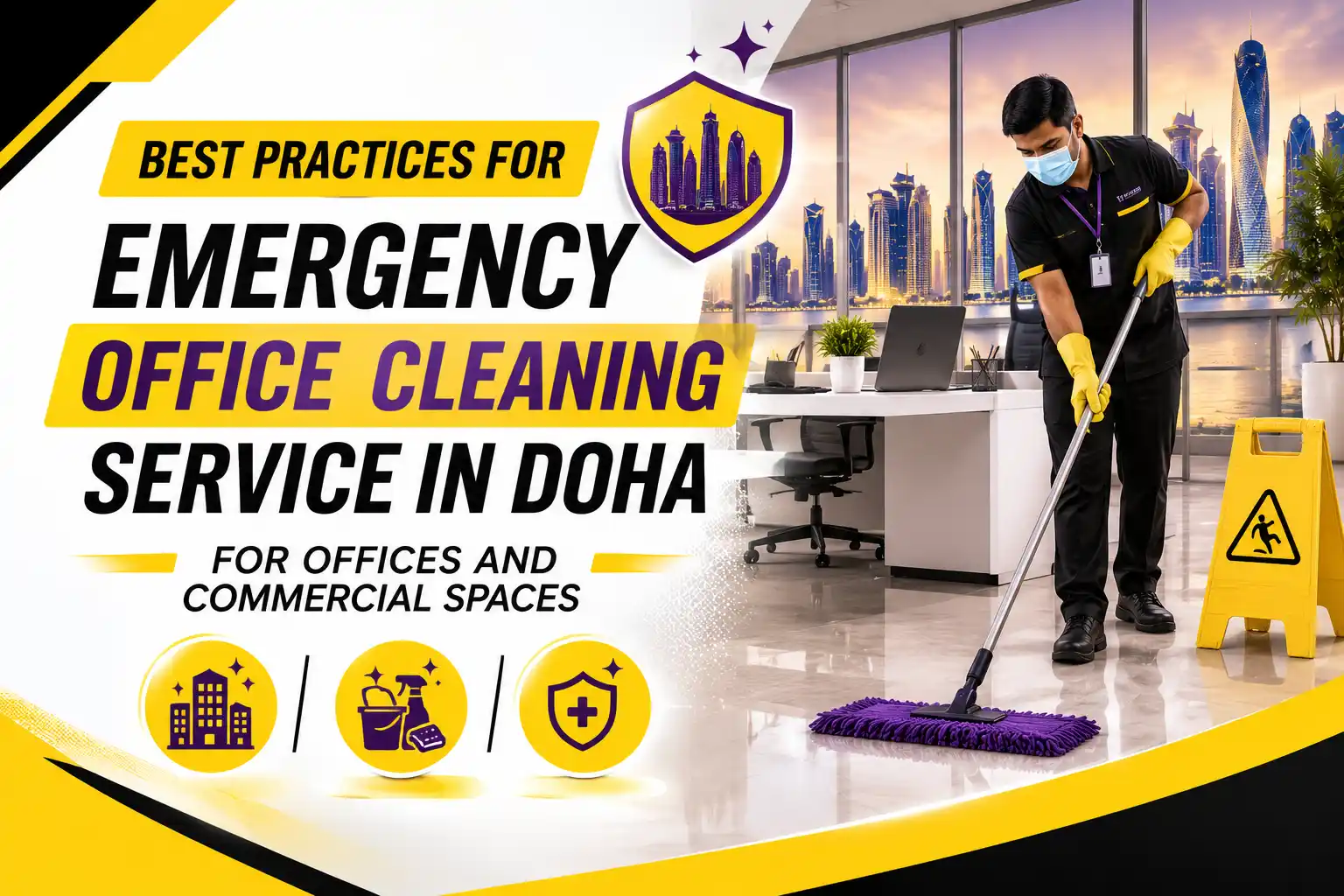
If you enter two offices of comparable size and age, you can typically determine in thirty seconds which one is taking care of it and which has a true cleaning strategy in place. Additionally, appearances are not the only factor. Since a cluttered, dusty, or badly maintained workspace has a tendency of slowly lowering morale without anybody exactly knowing why, a truly clean office has an impact on client impressions, employee health, and even productivity.
Having defined, consistent cleaning procedures rather than depending on occasional effort whenever a client visit is approaching is almost always the difference. The way your workspace looks, feels, and operates on a daily basis may be significantly improved by understanding what those best practices actually entail and knowing when a scenario calls for the best Emergency Office Cleaning Service in Doha rather than waiting for the next scheduled visit.
This article will cover how to create a schedule that works in practice, what to look for when selecting professional support, and daily, weekly, and monthly cleaning procedures that keep an office truly well-maintained. This breakdown should provide you with a clear, useful structure to operate from, regardless of whether you manage a complete commercial floor or a small startup office.
Why Office Cleaning Requirements Are More Important Than You May Imagine
A tidy office is about more than appearances, even if initial impressions with customers and visitors are crucial. Consistent cleaning directly affects employee health because shared surfaces like keyboards, door knobs, and pantry equipment are touched by dozens of people every day and can quickly become a source of illness if not regularly cleansed.
Strong cleaning practices usually result in fewer instances of colds and other common illnesses spreading among staff members than offices that clean infrequently or superficially.
Productivity is another factor that is easy to overlook. Even if no one on the team can pinpoint the precise reason why the office seems off, cluttered, dirty, or obviously neglected workspaces add to a sense of disorder that can gradually influence focus and morale. It pays dividends in ways that go well beyond aesthetics when the fundamentals are done correctly on a regular basis instead of rushing before a client visit.
Best Practices for Daily Cleaning
These tasks should be finished every working day in order to maintain basic hygiene and order:
- Emptying the trash cans at the office, particularly in the kitchens and break areas
- Cleaning public spaces including workstations, conference tables, and kitchen countertops
- Cleaning high-touch areas such as door handles, light switches, and shared equipment
- Keeping restrooms clean, restocking supplies, and attending to hygiene requirements all day long
- Cleaning or vacuuming busy places, especially hallways and entrances
- Clearing out visible clutter from open spaces and shared rooms
Ignoring these basics for even a few days may soon mount up, especially in a busy office where dozens of people are causing disruption all day.
Weekly Cleaning Best Practices
In addition to daily maintenance, a weekly schedule takes care of things that need regular consistency but do not require daily attention:
- Complete floor cleaning, including more thorough vacuuming and washing of hard surfaces
- Dusting surfaces like shelves, window sills, and equipment in addition to the regular wipe-down
- Cleaning internal glass, such as conference room partitions and glass doors
- Cleaning kitchen appliances, including coffee makers, refrigerators, and microwaves
- Inspecting and refilling the office’s cleaning supplies
- Cleaning chairs and other furniture that has accumulated dust and grime over the week
A regular weekly schedule avoids the kind of slow accumulation that finally needs to be addressed with much more intense effort.
Best Practices for Deep and Monthly Cleaning
Even though some tasks only need to be attended to on a monthly or quarterly basis, neglecting them entirely eventually shows itself in ways that daily and weekly cleaning cannot handle:
- Deep cleaning upholstery and carpets to remove dust and allergens that a regular vacuum cannot reach
- Air vent and duct dusting, supporting better indoor air quality throughout the office
- Thorough cleaning of the pantry and kitchen, including the spaces beneath and behind appliances
- Window washing, including both interior and exterior windows, when feasible
- Thorough tile and grout cleaning in the kitchen and bathrooms
Establishing a regular monthly or quarterly schedule for these duties instead of waiting until they are clearly overdue maintains the office in much better condition all year long.
The Best Ways to Disinfect High-Touch Surfaces
Because shared surfaces directly affect worker health, disinfection demands extra care in addition to ordinary cleaning. The following are some best practices:
- Recognizing all of the office’s high-touch areas, including shared keyboards, elevator buttons, door knobs, and pantry supplies
- Utilizing proper disinfectants that have been demonstrated to be effective against common bacteria and viruses and adhering to the recommended contact time for optimal efficacy
- Increasing the frequency of disinfection during flu season or when any staff members are declared sick
- Setting up hand sanitizer stations at strategic locations across the office to provide an extra degree of security
- Educating employees on fundamental hygiene practices is important since improper personal hygiene in a shared area cannot be completely remedied by cleaning alone.
This level of cleaning is frequently what distinguishes an office that is actually preventing the spread of illness among employees from one that only appears clean.
Typical Office Cleaning Errors to Avoid
Even offices that have a cleaning strategy in place occasionally encounter preventable problems that compromise a routine that is otherwise sound. Be careful of:
- Cleaning as simply aesthetic, concentrating mainly on surfaces that are visible and neglecting to disinfect high-touch areas that have a real impact on workers’ health
- Using the same cleaning cloth in several locations, especially between kitchens and restrooms, might spread bacteria rather than eradicate it.
- Ignoring air quality can negate the advantages of an otherwise tidy office due to dirty vents and neglected air filters.
- Assuming that a larger budget inevitably correlates to a greater outcome, it is important to consider that a well-organized schedule with defined responsibilities frequently outperforms an expensive but poorly organized cleaning plan.
- Neglecting to inform your cleaning provider of any modifications, including the addition of new personnel, the relocation of the layout, or the addition of equipment, resulting in an outdated understanding of the space.
Treating cleaning as an ongoing system that requires periodic evaluation rather than a predetermined strategy that is set once and never addressed is usually the key to avoiding these issues.
Making an Effective Cleaning Schedule
Nobody benefits from a cleaning routine that is only written down. To construct one that truly endures, you need the following:
- Clear assignment of responsibility, whether tasks are handled internally or through a professional service
- Realistic frequency that is determined by the actual use of the office, rather than an arbitrary schedule that is copied from another business.
- Written checklists for each cleaning tier, including daily, weekly, and monthly, to ensure that no tasks are omitted during periods of activity.
- A designated point of contact for reporting cleaning issues or requesting additional attention to a specific area
- Periodic review and adjustment, since office needs change as staff numbers or space usage evolves over time
The offices that maintain consistently high standards are rarely the ones with the most elaborate plan. They are the ones with a simple, workable plan that is really implemented on a regular basis.
Internal vs. Outsourced Office Cleaning
Factor | In-House Cleaning | Outsourced Professional Cleaning |
Staffing and management | Internal responsibility | Handled by the provider |
Equipment and supplies | Purchased and maintained internally | Included in service |
Consistency | Depends on internal discipline | Structured, professional standards |
Flexibility for urgent needs | Limited | Often includes emergency response |
Cost predictability | Variable, harder to forecast | Fixed, defined in contract |
Expertise for deep cleaning tasks | Limited without training | Professional-grade equipment and technique |
This comparison plays a significant role in the reason why so many companies finally turn to outsourcing cleaning, especially after the internal administrative strain of managing cleaning personnel and supplies becomes apparent.
What Professional Commercial Office Cleaning in Doha Involves
A proper professional commercial office cleaning Doha service usually goes much beyond a simple daily cleaning. Expect:
- A personalized cleaning plan based on your office’s size, layout, and industry requirements
- Cleaning staff who have received training, undergone background checks, and are acquainted with commercial-grade equipment and supplies
- Flexible scheduling, frequently working outside of regular business hours to prevent interfering with regular activities
- Service standards that have been documented, providing you with a clear reference for what should be included in every visit
- Scalability allows you to adjust the frequency or scope of services as your business grows or changes.
In contrast to a rigid, one-size-fits-all cleaning package, a service that treats this as a genuine partnership and adapts to your feedback and evolving demands usually yields much better long-term results.
When You Require Emergency Office Cleaning Services in Doha
Some situations cannot wait for the next scheduled visit. Reach out for Emergency Office Cleaning Service near me in Doha, sometimes referred to as emergency commercial office cleaning in Doha, when:
- A spill or accident creates an urgent hygiene concern in a shared area
- An employee illness requires immediate, thorough disinfection of affected areas
- You have an unexpected client visit or event requiring the office to look its best on short notice
- Water damage or another incident disrupts normal office cleanliness unexpectedly
- You are preparing for a health or safety inspection with limited advance notice
In these situations, working with a provider offering genuine emergency response, rather than the next standard scheduled slot, protects both your team’s well-being and your business’s professional image.
How to Choose a Commercial Office Cleaning Company in Doha
If you are comparing providers for a commercial office cleaning company Doha businesses can depend on or looking specifically for an affordable Emergency Office Cleaning Service Doha option, here is what to look for:
- Transparent, itemized pricing, rather than a vague flat quote with unclear inclusions
- Experience with businesses similar to yours, since office cleaning needs vary by industry and space type
- Emergency and planned services are available, ensuring flexibility in the event of an unanticipated situation
- Clear channels of communication, such a specific person to contact in case of urgent requests or remarks
- References or reviews from other commercial clients, ideally businesses of a similar size or industry
Comparing providers on these specific points, rather than price alone, generally leads to a more reliable, long-term cleaning partnership.
How Adonai Solutions Delivers Emergency Office Cleaning Service in Doha
Adonai Solutions has been supporting businesses across Doha with commercial cleaning services since 2016, offering both scheduled maintenance plans and reliable Emergency Office Cleaning Service in Doha for situations that cannot wait. The team develops cleaning programs depending on each office’s particular layout, industry, and working hours rather than use a generic package regardless of the specific region.
Whether you need daily maintenance cleaning, a quarterly thorough clean, or urgent same-day assistance when something unexpected happens, the goal is always a workspace that consistently looks and functions at its best, supported by dependable follow-through and clear communication.
Conclusion
Office cleaning best practices are simple, but they do require consistency, responsibility, and a reasonable schedule that is really followed rather than ignored during busy workweeks. A workspace that genuinely improves employee health and creates a positive first impression on clients and guests is the outcome of daily maintenance, weekly deeper attention, and monthly or quarterly deep cleaning.
If your current cleaning schedule is not keeping up with your office’s actual needs or you want a dependable partner prepared for the unexpected, working with a reputable Emergency Office Cleaning Service Doha provider is one of the simplest ways to keep your workspace consistently in top condition without the burden falling on your own team.
Get Emergency Office Cleaning Service in Doha
Keep your office clean, hygienic, and business-ready with reliable emergency cleaning support from Adonai Solutions.
Frequently Asked Questions
What should be included in a routine office cleaning schedule?
A decent daily routine should include emptying trash cans, cleaning restrooms and restocking supplies, washing down shared surfaces like workstations and kitchen counters, disinfecting high-touch points like door handles and shared equipment, and clearing up evident clutter in common areas. The foundation of a tidy, presentable workplace is these tasks, and if they are neglected for even a few days, mess and accumulation tend to get worse very rapidly, especially in busy offices where many people utilize common spaces on a daily basis.
In addition to routine daily and weekly cleaning, how frequently should an office plan a deep clean?
On a monthly or quarterly basis, most offices benefit from a deeper clean that includes things like comprehensive kitchen appliance cleaning, extensive grout cleaning, and carpet and upholstery treatment. The appropriate frequency is dependent upon factors such as the size of the office, the volume of foot traffic, and the presence of a kitchen or food prep area, as these areas tend to accumulate buildup at a faster rate than a standard open office layout. The office remains considerably better throughout the year when deep cleaning is treated as a regular, scheduled duty rather than something that is only done when it is clearly past due.
Is it more economical to outsource office cleaning than to do it internally?
Yes, for a lot of organizations, especially when you take into consideration the entire expense of running an internal cleaning department, which includes paying employees, buying equipment, paying for supplies, and spending time on administrative tasks. In addition to providing access to professional-grade equipment and skilled techniques that would be costly to duplicate domestically, outsourced cleaning usually combines these expenses into a predictable, fixed contract. However, the best option will depend on the size and requirements of your particular office, so it is worthwhile to compare actual expenses on both sides before making a decision.
When doing routine cleaning, which parts of an office are most frequently neglected?
Among the most frequently overlooked places during basic cleaning are air vents, window tracks, the area behind and underneath furniture, and the interiors of kitchen appliances like refrigerators and microwaves. These areas do not instantly exhibit obvious filth, which is precisely why they are frequently ignored over time until accumulation becomes apparent and is much more difficult to remove during a fast clean. Building these areas into a monthly or quarterly deep cleaning schedule helps ensure they receive proper attention on a predictable, recurring basis.
How can office cleaning practices help reduce employee sick days?
Consistent disinfection of high-touch surfaces, such as keyboards, door handles, and shared pantry equipment, directly reduces the spread of common illnesses like colds and flu, since these surfaces are touched by many people throughout the day and can otherwise act as a transmission point. Offices that maintain strong daily disinfection habits, combined with accessible hand sanitizer stations and clear staff hygiene expectations, tend to see a noticeable reduction in the number of illnesses circulating through the team compared to offices with inconsistent or superficial cleaning practices.
When should a business consider calling for emergency office cleaning instead of waiting for the next scheduled visit?
Emergency cleaning makes sense for situations that pose an immediate hygiene, safety, or professional image concern, such as a spill in a shared area, an employee illness requiring urgent disinfection, an unexpected client visit on short notice, or preparation for a health and safety inspection with limited lead time. In these situations, waiting for a standard scheduled visit could mean an unresolved issue affecting staff health or leaving a poor impression on visitors, which is exactly the kind of gap a genuine emergency cleaning service is designed to fill quickly.
How do I choose the right commercial cleaning company for my office?
Start by comparing transparent, itemized pricing rather than a vague flat quote, and ask specifically about the provider’s experience with businesses similar in size and industry to yours, since cleaning needs vary considerably between, for example, a law office and a busy retail space. Confirm whether the provider offers both scheduled and emergency service, request references or reviews from other commercial clients, and ask about their process for communication and feedback between visits. A provider who is transparent and responsive to these questions upfront is generally a strong indicator of how reliable they will be once the contract is active.