
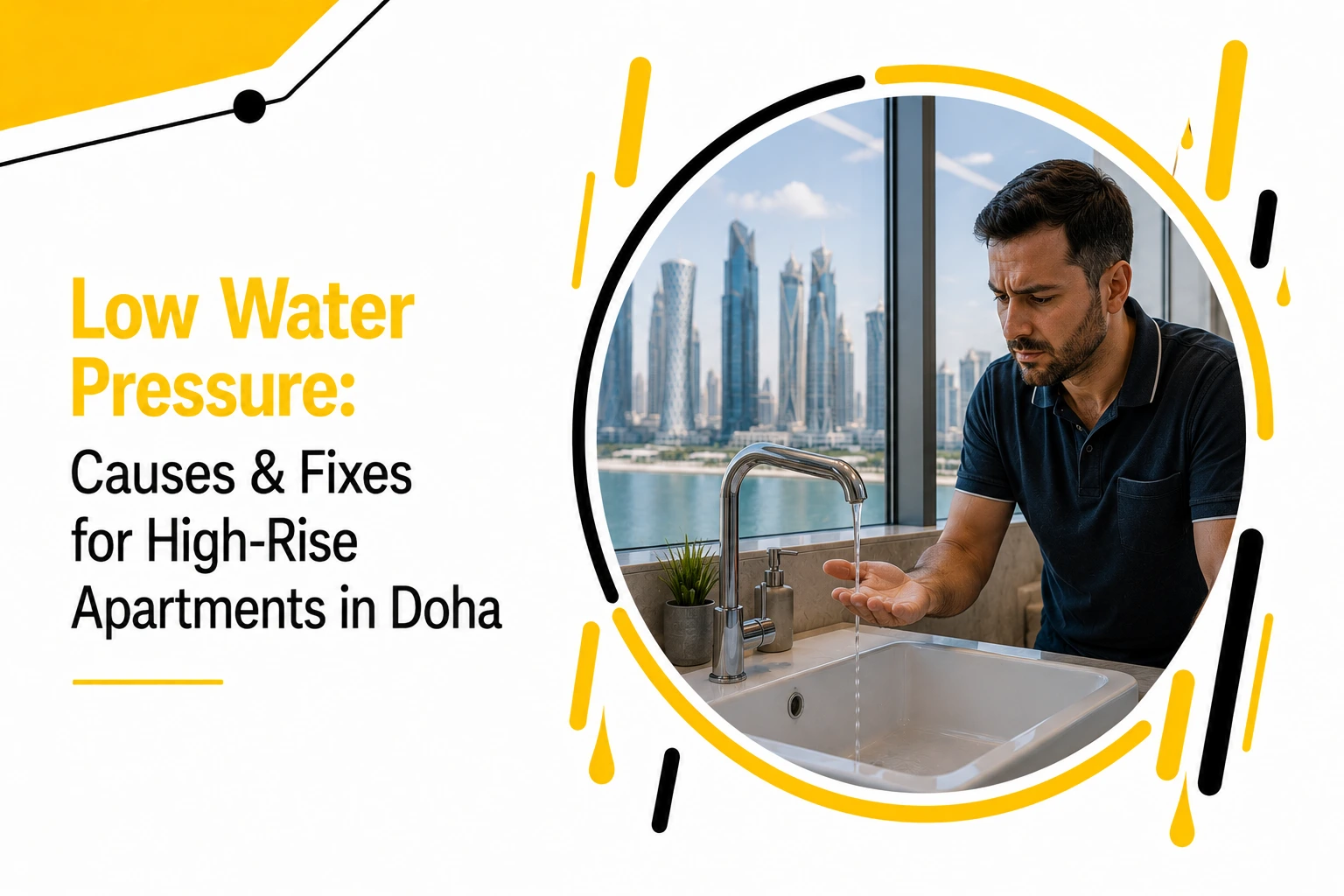
If you have ever had the misfortune of stepping into your bathroom in the early hours of a Tuesday morning in West Bay and discovering there was only a meagre dribble of water rather than a healthy flow, then you have firsthand experience of what we like to refer to as “the high-rise hurdle”. In terms of the physics of life in Doha’s vertical cityscape, the pressure of water is a critical factor. On average, water pressure can drop around 0.43 pounds per square inch for each additional vertical foot it travels.
Low water pressure is the most common complaint raised by residents in Qatar’s high-rise towers. Many simply resign themselves to the problem, figuring that low pressure is a necessary consequence of life in a skyscraper. But that’s not the case at all ; most instances of poor pressure are simply the result of specific faults that can be addressed. Here is how.
Why High-Rise Buildings in Doha Are Prone to Low Water Pressure
The skyline in Doha is among the fastest-growing in the world. Nevertheless, although the façade of these skyscrapers might be state-of-the-art, their plumbing system “guts” are not able to cope with the needs of thousands of people living on top of each other.
The Gravity Deficit
Gravity is the primary enemy of high-rise living. Most municipal water systems are designed to provide enough pressure for a two-storey villa, not a forty-storey tower. To bridge this gap, towers must use complex mechanical systems.
-
- The 5th Floor Fade: For most buildings, the natural “push” from the city’s main grid starts to fail around the 5th floor.
-
- Upper-Floor Vulnerability: Residents living above the 10th or 15th floor are the “canaries in the coal mine.” They are the first to feel it when the building’s booster system loses even a fraction of its efficiency.
-
- Friction Loss: As water travels through hundreds of meters of vertical piping, the internal friction of the pipe walls slows the water down, leading to persistent low water pressure.
Doha’s Municipal Supply and Peak Hours
The water flowing through your pipes is a marvel of engineering; desalinated at massive plants and piped across the desert. But this system has its limits.
-
- The 7 AM Rush: Between 6:00 AM and 9:00 AM, thousands of people in your neighbourhood are showering and brewing coffee at the same time. This massive “draw” on the local district main causes a temporary drop in the inlet pressure entering your building.
- Aging District Mains: In some older parts of Doha, the underground pipes supplying the towers are decades old and can’t always deliver the volume required for a modern, high-density residential block.
See Also: Looking to upgrade your waiting areas? Discover the perfect blend of style and comfort with our sofa couches in Qatar.
Is It Just You Or a Building-Wide Problem?
Before you start dismantling your bathroom fixtures, you need to play detective. The most important step is figuring out if the bottleneck is happening inside your apartment or outside in the building’s common pipes.
This saves you from paying for a reliable emergency plumber when the building management should be handling the bill.
Diagnostic Steps for Your Unit
-
- The Tap Audit: Go through your apartment and turn on every single tap. If the kitchen has great flow but the guest bathroom is weak, the problem is localized.
-
- Isolation Check: If every tap in your unit is weak, but your neighbor in the apartment next door has great pressure, then the issue is likely your unit’s individual Pressure Reducing Valve (PRV) or a clog in your specific intake line.
-
- Timing the Drop: If you have great pressure at midnight but low water pressure at 7:30 AM, you are likely a victim of “peak demand” issues within the tower.
Read Also:
- HVAC Maintenance in Doha: 5 Best Tips to Lower Energy Bills
- NOC Qatar: Understanding the Rules for Job Transfers
- Smart Home Benefits: How to Control Your Doha Villa from Your Phone
Signs of a Building-Wide Supply Problem
If you talk to the other people who live on your floor and they all complain about getting the same weak flow of water, then the problem lies in the central pumping station within the building itself. The same applies when the showers at the gym or the taps in the lobby bathrooms provide weak water pressure.
The Ultimate Plumbing Troubleshooting Checklist
Instead of contacting building management or external contractors, try the following plumbing troubleshooting tips first. They may seem complicated but are much easier to execute than expected.
Inspect Aerators – The little mesh-like screen on the end of the faucet. In Doha where there is safe water but high in minerals; the aerator will capture small pieces of stone and calcium. Unscrew the aerator, put it in some vinegar, and if water comes out after that, you are all set.
Shut-off Valves – Inspect under each sink and behind each toilet to inspect for shut-off valves. Occasionally, they may be bumped or still partially open from a maintenance visit. Make sure each is in the fully on position (handle or lever turned fully to the open position).
Main Water Pressure Regulator – This is a bell-shaped valve which can usually be found in a ceiling (hatch) above where you access your front door. This device will prevent too much pressure from damaging your pipes; however, if it’s old, it can be “stuck” in a low pressure setting.
Water Heater – If you only find that your low water pressure issue exists in the hot water system. Most likely the sediment in the tank of your hot water heater is blocking the outlet pipe.
The Heart of the Problem: The Building Booster Pump
Doha high-rises don’t just rely on gravity to get water to you; they use a “Transfer and Booster” system. Water enters a basement tank and is then “boosted” up to a rooftop storage tank.
If that basement pump isn’t working at 100%, or if the sensors that tell the pump when to turn on are dusty or faulty, the rooftop tank won’t stay full. When the water level in that rooftop tank drops, you lose “head pressure.”
For a resident on the top floor, a half-empty rooftop tank means instant low water pressure. This is a structural maintenance issue that requires a professional team to recalibrate the building’s central control panel.
Strategies to Boost Water Pressure Permanently
If building management is dragging their feet, or if the building’s design is simply inadequate for the number of residents, you have options to take control of your own water supply.
Installing a Unit-Level Booster Pump
One of the most effective ways to boost water pressure is to install a dedicated inline pump specifically for your apartment. These devices are compact, silent, and sit on your main incoming water line.
When they sense you have opened a tap, they activate an impeller that draws water into your unit with much more force. This ensures that no matter how many people are showering in the rest of the building, your shower remains powerful.
Upgrading Your Fixtures
If you can’t install a pump, look at your fixtures. Many “eco-friendly” showerheads sold in Doha are actually too restrictive for buildings that already have low water pressure.
Switching to a high-performance showerhead designed for low-flow environments can make a world of difference. These heads use air-injection technology to make a small amount of water feel like a much heavier stream.
Why Doha’s Water Chemistry Matters
Living in Qatar means dealing with desalinated water. While the water is treated to high standards, the heat of the Doha sun and the long journey through pipes can cause mineral precipitation. This creates “scale”;a hard, white crust that builds up inside your pipes.
This scaling is a silent killer for water pressure. It gradually narrows the internal diameter of your pipes over five to ten years. You might not notice it at first, but eventually, the 1/2-inch pipe in your wall becomes a 1/4-inch pipe because of the scale buildup. This is why consistent plumbing troubleshooting and professional descaling are so important for long-term residents.
When to Bring in a Professional Plumber in Doha
There is only so much a resident can do with a wrench and a bottle of vinegar. If you have cleaned your aerators and checked your valves but still face low water pressure, you need a technical assessment.
Professional Pressure Testing
A licensed plumber uses a “dynamic pressure gauge” to see how the PSI drops while the water is actually running. This helps them identify if the block is in your PRV, your heater, or deep inside the building’s vertical stack.
PRV Replacement and Calibration
Adjusting a PRV is a delicate task. If you turn it too high, you risk blowing out the hoses on your washing machine or dishwasher. A professional ensures that the pressure is high enough to be comfortable but low enough to be safe for your appliances. This is the most common professional method to improve water pressure at the individual apartment level.
How Adonai Solutions Fixes Pressure Challenges in Qatar
Adonai Solutions isn’t just a plumbing company; they are facility experts who understand the “vertical lifestyle” of Doha. They know that every tower has its own personality; some have aging pumps, while others have poorly designed “zones” that leave certain floors in the lurch.
Their team provides comprehensive plumbing troubleshooting that looks at the big picture. From flushing out sediment-clogged pipes to installing state-of-the-art booster pumps, they offer solutions that are tailored to the specific water chemistry and infrastructure of Doha. They work with both individual residents and building managers to ensure that “low flow” becomes a thing of the past.
Long-Term Maintenance: Keeping the Pressure High
Once your pressure is restored, you need a plan to keep it that way. In a city where dust and minerals are everywhere, “set it and forget it” isn’t an option for your plumbing.
-
- Quarterly Faucet Flushes: Remove your showerheads and aerators every three months and soak them in a descaling solution. This prevents the “slow death” of your water pressure.
-
- Annual Heater Service: Have a technician flush your water heater every year. This removes the “sand” and scale that settles at the bottom, which is a major cause of low water pressure on the hot water side.
-
- Management Accountability: Don’t be afraid to ask your building manager for the latest pump service report. As a tenant or owner, you have a right to know that the infrastructure you pay for is being maintained.
-
- Leak Detection: Even a small, silent leak in a toilet tank can steal pressure from the rest of your apartment. Perform a dye test on your toilets once a year to ensure they aren’t “bleeding” your pressure away.
The Hidden Impact: Appliances and Hygiene
We often focus on the shower, but low water pressure has a massive impact on your home’s technology. The dishwashers and washing machines are designed to work at a particular flow rate. Low pressure means that they will require twice as much time to wash clothes and dishes, or maybe even fail to clean them thoroughly.
Furthermore, weak pressure makes it harder to properly rinse soap and shampoo, which can lead to skin irritation and build-up. Fixing your water pressure isn’t just about luxury; it’s about the health of your family and the longevity of your expensive appliances.
Wrapping Up
Residing in a tall building in Doha must be a luxurious living experience, but low water pressure will turn your luxury living space into a nightmare. Whether you have blocked the aerator by minerals, your building pump is malfunctioning, or the PRV is not set properly, all you need is an effective remedy.
It is imperative to solve the issues with logical plumbing troubleshooting methods, from your fixture to your building’s mainline pipe, to detect the problem area.
However, when DIY techniques do not work, Adonai Solutions comes in handy. Take action to boost water pressure and reclaim the comfort you deserve with professional support.
Restore Strong Water Flow with Expert Plumbing Solutions in Doha
Fix low water pressure quickly with professional diagnosis, reliable repairs, and customized plumbing solutions for high-rise apartments.
Frequently Asked Questions
What is the primary cause of low water pressure?
The most frequent cause of low water pressure is a physical restriction within the plumbing system. This can range from mineral scale buildup in aging pipes to a partially closed main shut-off valve. In many cases, a failing Pressure Reducing Valve (PRV) or a simple clogged faucet aerator is the culprit. External factors, such as municipal water line repairs or high neighborhood demand, can also temporarily decrease the force of flow entering your home.
When should you contact a professional plumber?
You should contact a plumber if DIY checks;like cleaning aerators;fail to resolve the issue or if the pressure drop is sudden and severe. Persistent rattling sounds in the walls or discolored water are also red flags. Adonai Solutions provides expert diagnostic services in Doha, using advanced pressure gauges to identify if the bottleneck is a hidden water leak or a structural valve failure that requires specialized mechanical repair.
Why is low water pressure common in high-rise buildings?
In vertical towers, gravity is the main adversary. Moving water upward requires immense force, and pressure naturally drops by approximately 0.43 PSI for every vertical foot. High-rise living often results in low water pressure on upper floors if the building’s central booster pump is under-calibrated or if the rooftop storage tank isn’t maintained. Without a robust mechanical “push,” the water simply loses its momentum before reaching your showerhead.
What are the most common signs of low water pressure?
The most obvious signs include a weak, sputtering stream from faucets and showerheads that feel like a light drizzle. You may also notice that your dishwasher or washing machine takes significantly longer to complete a cycle. If you notice these symptoms, performing a basic plumbing troubleshooting routine is essential. Frequent “shuddering” noises when you turn on a tap are also an indication that the air-to-water ratio in your pipes is imbalanced.
How do you boost water pressure in a high-rise apartment?
The most effective way to boost water pressure at the unit level is by installing a compact, silent inline booster pump. These devices detect flow and activate an internal impeller to increase the PSI specifically for your apartment. Adonai Solutions specializes in these installations, ensuring they are sized correctly to prevent pipe damage. They also recalibrate PRVs to ensure your home receives the maximum safe flow allowed by the building’s infrastructure.
How do you fix low water pressure in your home?
Fixing the flow often begins with a thorough plumbing troubleshooting process: clean your faucet aerators, flush your water heater to remove sediment, and ensure all shut-off valves are fully open. If these steps fail, you likely have a deeper mechanical issue. Adonai Solutions can help by descaling internal pipes or replacing faulty valves, providing a “real fix” that restores your plumbing to its peak performance and efficiency.