
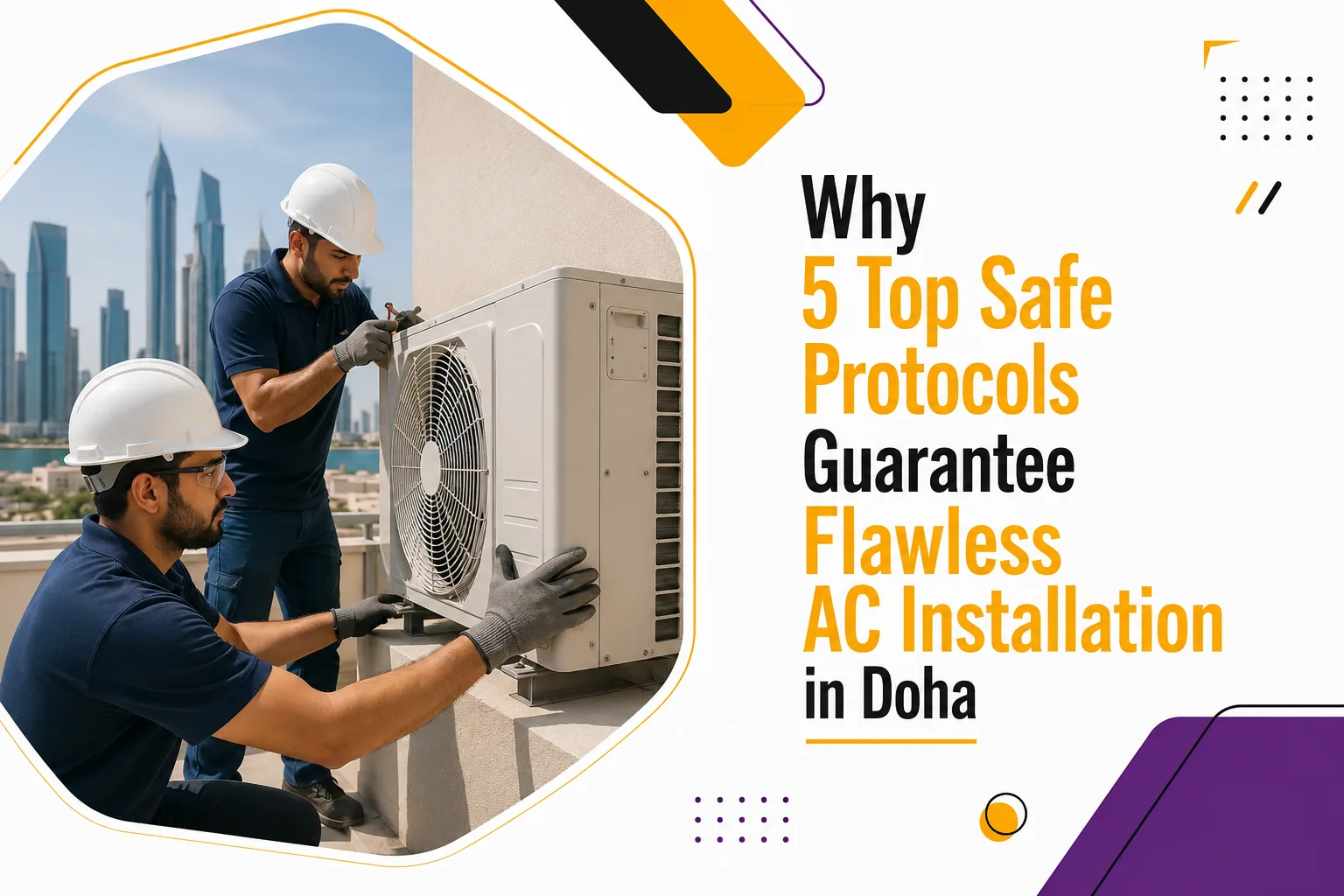
On the day of installation, a brand-new air conditioner feels like a minor success. The hum fades into the background, cool air fills the space, and life continues. A few weeks later, a drip begins to fall on the windowsill every afternoon, or a thin water stain emerges on the wall under the unit. What appears to be a simple mounting task becomes a repair call, a wall that is damaged, and a unit that never fully functions as it should have right from the start.
This is nearly always a protocol issue rather than a product issue. A mid-range air conditioner installed properly can function flawlessly for years, but a high-quality machine installed carelessly can underperform and eventually cause damage.
For this reason, whether you are going to fit new aircon units in a new apartment or replace an outdated system in a villa that has served the family for years, it is important to understand the safe procedures behind expert AC installation and Professional Servicing in Qatar. In this guide, we will walk through the five protocols every qualified HVAC installer Qatar homeowners trust actually follows and why skipping any one of them tends to cause the exact problems people blame on the equipment itself.
Why Mistakes in AC Installation Are So Frequent in Doha
Few other places face the kind of stress that Qatar’s environment places on air conditioning equipment. Any flaw in the initial installation is revealed far more quickly than it would be in a milder climate because units operate nearly nonstop for the majority of the year, frequently at maximum capacity during peak summer months.
Somewhere else, a badly sloped drainage pipe, an undersized refrigerant line, or a little loose bracket can go unnoticed for a while. In Doha, these issues tend to surface within weeks.
There is also a volume factor. With so much new construction and renovation happening across Doha, a large share of AC installations happen under tight timelines, sometimes handled by teams without proper certification or experience with the specific demands of the local climate.
This combination of extreme operating conditions and inconsistent installation quality is exactly why safe, standardized protocols are so important for AC installation in Doha, far more than they would be in a market with milder weather and lower installation volume.
Protocol 1: Accurate Load Calculation Before Cooling System Setup
Before any unit goes on a wall, a proper cooling system setup starts with a load calculation, not a guess based on room size alone. This is one of the most commonly skipped steps, and it is also one of the most consequential.
- Room dimensions and ceiling height determine the base cooling requirement
- Window size and orientation affect how much heat enters the room throughout the day, particularly with Doha’s intense sun exposure
- The quality of insulation in walls and ceilings affects the actual amount of cooling capacity required.
- Number of occupants and heat-generating appliances in the space increases the real-world cooling load
- Building material, since concrete villas and glass-heavy apartment towers retain and radiate heat differently
Skipping this step and simply matching unit size to room size by rough estimate is how oversized or undersized units end up installed. Even if the temperature is low, rooms feel damp because an enormous unit cools too quickly without adequately eliminating humidity.
An undersized unit never quite reaches a pleasant temperature because it is always under stress, which reduces its lifespan and raises electricity costs.
Protocol 2: Correct Wall Mounted AC Positioning and Structural Support
Positioning is where a surprising number of installation problems begin, particularly with wall mounted AC units, which rely entirely on secure bracket installation to function safely over time.
Choosing the Right Wall Location
- Avoid direct sunlight hitting the indoor unit, which affects both efficiency and the accuracy of built-in temperature sensors
- Position units at least six to eight inches from the ceiling to allow proper airflow around the unit
- Ensure the wall material can support the unit’s weight, particularly important for older buildings with different wall compositions than newer construction
Structural Mounting Requirements
A wall mounted AC unit that is not properly secured into structural material, rather than just surface plaster, is a serious safety and performance risk. Expert installers verify for load-bearing capacity before drilling a single hole and use anchors rated for the particular type of wall.
Units gradually become loose, vibrate excessively, or, in the worst situations, separate completely from the wall if this step is skipped.
Protocol 3: Installing Condensate and Drainage Lines Correctly
This is the protocol most directly tied to the water leak problem mentioned earlier, and it is one of the most frequently rushed steps in a low-quality installation.
- Correct slope on the condensate drain line ensures water flows away from the unit rather than pooling and eventually leaking back inside
- Properly sized and insulated drain pipes prevent condensation from forming on the pipe exterior itself, which can drip just as much as a leak from inside the unit
- Clear routing away from electrical components, both inside the unit and along the exterior wall
- A secondary drain pan or sensor, particularly valuable in units installed above finished ceilings or walls where a slow leak could go unnoticed for weeks
A poorly installed condensate line is almost always the root cause behind the classic “AC unit leaking water indoors” complaint. The unit itself is rarely at fault. The drainage installation is.
Protocol 4: Refrigerant Line Sizing and Leak-Free Connections
The refrigerant lines connecting the indoor and outdoor units carry the actual cooling process, and getting this wrong affects performance immediately, even if it is not visually obvious.
- Correctly sized copper lines matched to the specific unit’s specifications, since undersized lines restrict refrigerant flow and reduce cooling efficiency
- Connections should be properly flared and torqued because loose fittings are the most frequent cause of slow refrigerant leaks.
- Prior to charging the system, vacuum testing eliminates air and moisture from the lines, which would otherwise impair performance and eventually harm the compressor.
- Precise refrigerant charging is important because either too little or too much refrigerant makes the system work harder than it has to.
A system with a slow refrigerant leak will often still cool the room, just less effectively over time, which is exactly why this issue tends to go unnoticed until efficiency has already dropped significantly and the compressor has taken on unnecessary strain.
Protocol 5: Circuit Compliance and Electrical Safety
Significant electrical loads are generated by air conditioners, and poor electrical installation poses a real safety risk in addition to performance problems.
- Dedicated circuits for each AC unit, rather than sharing circuits with other high-draw appliances
- Properly rated circuit breakers matched to the unit’s electrical requirements
- Correct wire gauge, since undersized wiring can overheat under the sustained load air conditioning units place on a circuit
- Grounding and surge protection, particularly important given Doha’s occasional power fluctuations during peak summer demand
This protocol rarely gets attention because electrical work is often invisible once the installation is complete, but it is directly tied to both the safety of the system and its long-term reliability under Doha’s heavy usage patterns.
Which Cooling System Configuration Is Better for Your Space: Split AC or Central?
Not every property requires the same kind of cooling system setup, and selecting the appropriate system type is a personal choice that impacts everything from long-term operating costs to installation difficulties.
Split AC systems tend to work well for:
- Apartments and smaller villas where zone-by-zone cooling control is a priority
- Properties where retrofitting ductwork would be impractical or expensive
- Households wanting the flexibility to run cooling in only occupied rooms
Central cooling systems tend to work well for:
- Larger villas with consistent cooling needs across most rooms
- New construction where ductwork can be planned into the building design from the start
- Properties prioritizing a more uniform temperature and quieter operation throughout the home
The best option depends on the size of the property, the infrastructure that is currently in place, and how the space is actually used on a daily basis. A qualified installer should walk through this comparison with you before recommending a system rather than defaulting to whatever is easiest to install.
Signs Your AC Was Installed Incorrectly
A few warning signs tend to show up when one or more of these protocols were skipped during the original installation:
- Water stains or dripping near the indoor unit, indicating a drainage issue
- Unusually high electricity bills relative to the unit’s rated efficiency
- The unit struggling to reach set temperatures despite running constantly
- Excessive vibration or noise coming from the wall-mounted air conditioner
- A musty odor that frequently indicates moisture that has been trapped due to inadequate insulation or drainage
Instead of presuming the unit is flawed, it is worthwhile to have a skilled technician examine the original work if any of these appear within the first year after a fresh installation.
Questions to Ask Your Qatari HVAC Installer Before Making a Reservation
Asking the appropriate questions before any equipment is bought or installed is the key to selecting a reliable HVAC installer for Qatari residents.
- Do you calculate the entire load before suggesting a unit size?
- Which warranty clearly covers your installation workmanship as well as the equipment?
- For wall-mounted or ducted setups, how do you manage condensate drainage?
- Are your professionals qualified to install the particular brand and type of system?
- Which electrical safety inspections are part of the installation?
An installer who can respond to these questions with precision and clarity, as opposed to misleading assurances, is typically a clear indication that they adhere to correct procedures rather than hurrying through a task.
Finding Reliable AC Installation Near You
When searching for AC installation near you in Doha, a few practical checks help separate a dependable installer from one likely to cut corners:
- Request a written load calculation and proposed unit specification, not just a quote
- Confirm workmanship warranty terms, separate from the manufacturer’s equipment warranty
- Ask about experience with your specific property type, whether villa, apartment, or new construction
- Check reviews mentioning post-installation issues, particularly leaks or electrical problems
- Check certification and licensing, particularly for bigger or central cooling system setups.
When maintenance, increased electricity costs, and early equipment failure are taken into account, a hurried, inexpensive installation nearly always ends up costing more over time.
How Adonai Solutions Can Help
Getting an AC installation right the first time saves years of avoidable repair calls, water damage, and inflated electricity bills. Adonai Solutions provides professional air conditioning maintenance across Doha, following the same structured protocols outlined in this guide, that is, proper load calculation, secure mounting, correctly sloped drainage, precise refrigerant handling, and full electrical safety compliance.
If you are planning to fit new aircon units in a new property or upgrading an aging cooling system setup, Adonai Solutions’ AC services team can walk through the right approach for your specific space, whether that means a straightforward wall mounted AC installation or a more complex central cooling setup.
Conclusion
A flawless AC installation in Doha rarely comes down to luck or a particularly expensive unit. It comes down to protocol, which is accurate load calculations, secure and properly positioned wall-mounted AC units, correctly sloped drainage lines, precise refrigerant handling, and full electrical safety compliance.
Skip any one of these, and the consequences show up quickly given how hard Doha’s climate pushes cooling systems throughout the year. Insisting on these five procedures and asking your installer direct questions about each one is what truly distinguishes a system that operates dependably for years from one that begins to cause issues within the first few months, regardless of whether you are installing your first unit or replacing an aging system.
Stay Cool with Professional AC Installation in Doha
Enjoy efficient, reliable cooling with expert AC installation services for homes and businesses across Doha.
Frequently Asked Questions
What is the most frequent error made during AC installation in Doha?
The most frequent mistake is skipping a proper load calculation and instead sizing the unit based on a rough estimate of room dimensions alone. This leads to oversized units that cool quickly but fail to remove humidity properly, or undersized units that run constantly under strain without ever reaching a comfortable temperature. A close second is improper condensate drainage installation, which is the leading cause of the water leaks that show up weeks or months after a seemingly successful installation. Rather than a defect in the equipment itself, both problems are the result of hurried planning.
How can I tell if the installation of my wall-mounted AC system is correct?
When a wall-mounted AC unit is installed correctly, it should operate silently and vibration-free, stay firmly fixed to the wall without becoming loose, and not exhibit any water stains or drips on the wall underneath it. Additionally, the unit should reach its desired temperature without continuously operating at full capacity. Instead of assuming the unit is just broken, it is worthwhile to have a specialist examine the original mounting and drainage work if you see strange noises, a unit that feels loose when softly handled, or any moisture around the mounting region during the first few months after installation.
What should a Qatari villa's cooling system setup include?
Since concrete villas absorb and radiate heat differently than lighter construction, a thorough cooling system setup for a villa usually begins with a room-by-room load calculation that takes into consideration ceiling height, window exposure, insulation quality, and building type. After that, the installer should decide if the layout of the property and the infrastructure already in place are better suited for a split system or central cooling configuration. In order to guarantee long-term efficiency, the installation itself should include appropriately sized refrigerant lines, appropriately sloped drainage, dedicated electrical circuits for each unit or system component, and a vacuum test prior to refrigerant charging.
Why is water leaking inside my new air conditioner?
The condensate drainage line, not the unit itself, is almost always the source of indoor water leaks. A clogged drain that backs up over time, an undersized or poorly insulated drain line that condenses on its exterior, or an improperly sloped drain pipe that permits water to pool rather than flow away from the unit are common causes. In some cases, a secondary drain pan or leak sensor was never installed, which means a slow leak can go unnoticed for weeks before staining becomes visible. A qualified HVAC installer in Qatar can diagnose the exact cause and correct the drainage setup without needing to replace the entire unit.
How often should I have my AC system inspected after installation?
Most manufacturers and HVAC professionals recommend a maintenance check at least twice a year, ideally before the peak summer season and again toward the end of it, given how heavily systems run throughout Qatar’s hottest months. These inspections typically cover refrigerant levels, drainage line condition, filter cleaning, and electrical connection checks. Catching a small issue, such as a slightly loose refrigerant connection or a partially blocked drain, during a routine inspection is far less costly than waiting for it to cause a full system failure or water damage during peak summer demand.
Should I choose a split AC system or a central cooling system setup for my home?
The right choice depends largely on your property size, existing infrastructure, and how you use different rooms throughout the day. Split AC systems tend to work well for apartments and smaller villas where independent room-by-room control matters, or where installing ductwork would be impractical. Central cooling systems generally suit larger villas with consistent cooling needs across most rooms, particularly in new construction where ductwork can be planned into the design from the start. A qualified installer should walk through both options with you based on your specific property rather than defaulting to whichever system is quickest for them to install.
What questions should I ask before hiring someone to fit a new aircon unit?
Before booking an installation, ask whether the installer performs a full load calculation rather than estimating unit size by room dimensions alone, and request this calculation in writing. Ask what warranty covers their installation workmanship specifically, separate from the manufacturer’s equipment warranty, since many issues stem from installation errors rather than product defects. Confirm how they handle condensate drainage, whether their technicians are certified for the specific brand and system type you are installing, and what electrical safety checks are included. An installer who answers these questions clearly and specifically is generally far more likely to deliver a reliable, long-lasting installation.