
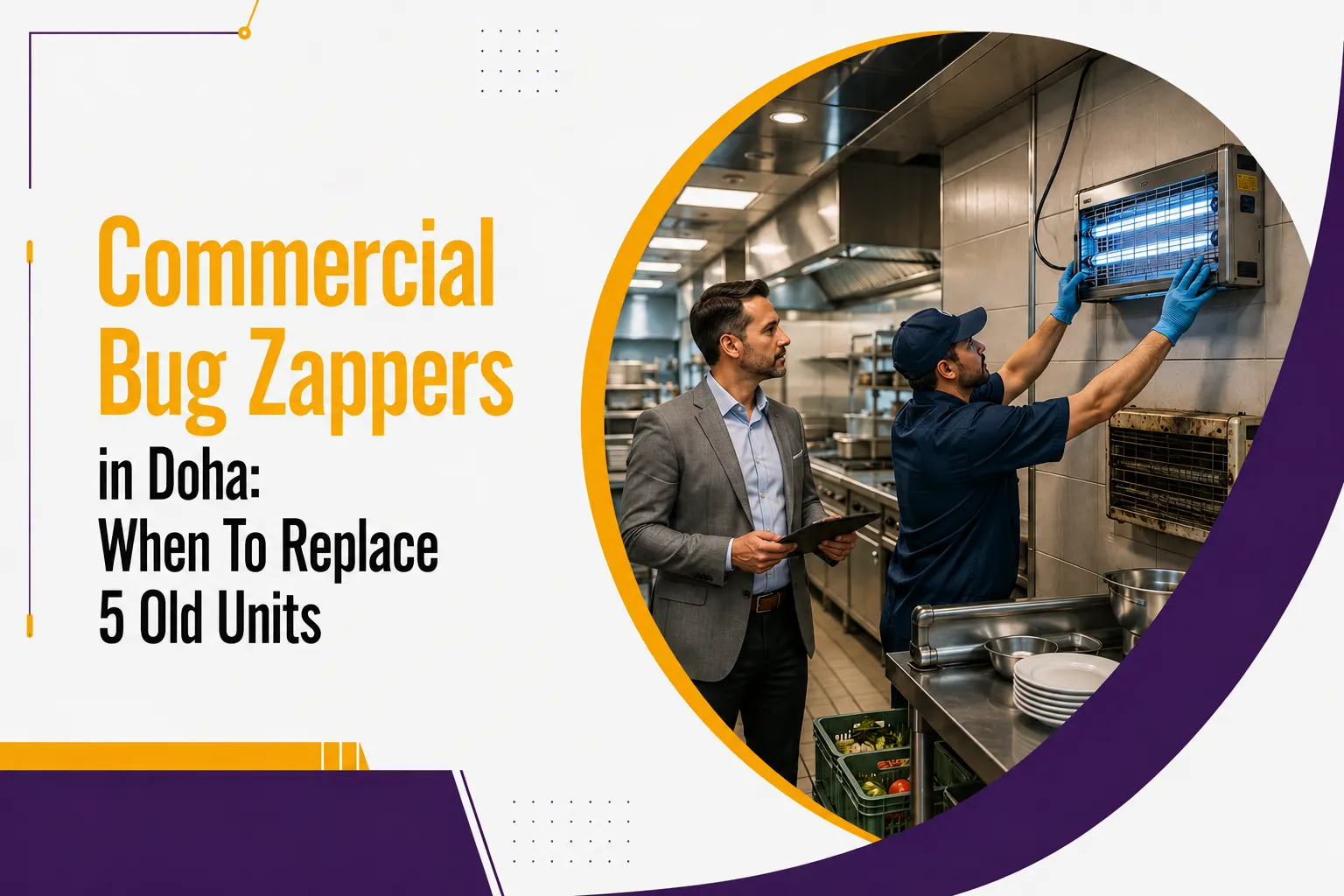
Studies show that over 60 percent of food business health violations in the GCC are linked directly to inadequate pest control measures. In Doha’s competitive food and hospitality sector, that statistic carries serious financial and reputational weight.
Commercial bug zappers are the primary protection against flying insects in kitchens, restaurants, and food storage areas. But here is what most operators overlook: an old, degraded unit does not just underperform. It actively creates risk.
Knowing exactly when to replace yours can be the difference between a clean audit and a health fine that shuts your doors.
Why Aging Commercial Bug Zappers Become a Hidden Risk
Most business owners assume their pest control devices are working simply because they are switched on. That is a dangerous assumption.
Commercial bug zappers lose efficiency gradually. The decline is slow enough that you will not notice it day to day, but inspectors will.
The Silent Decline of UV Lamp Performance
UV lamps do not burn out like ordinary bulbs. They dim. As the UV output weakens, flying insects are no longer attracted from the same distance. Your unit looks identical but covers significantly less ground.
In Doha’s hot, humid conditions, this degradation happens faster than manufacturers’ average estimates, often within 8 to 10 months of continuous use.
When Attraction Range Starts to Shrink
A full-strength unit draws insects from several meters away. A degraded one might only attract what is already nearby. In a busy kitchen or food prep area, that gap in coverage is where contamination risk lives.
This is the core reason why commercial bug zappers should be assessed on performance, not just on whether they are still switched on.
5 Clear Signs It Is Time to Replace Your Units
Sign 1 – The UV Bulbs Are Overdue
UV bulbs in commercial bug zappers should be replaced every 12 months, even if they appear to still be glowing. Visible light and UV output are not the same thing. A bulb can emit visible light long after its UV effectiveness has dropped below the useful threshold.
How Often Should You Actually Change Them?
For high-usage environments, such as kitchens running 12 to 16 hours daily, consider replacing bulbs every 8 months. If your unit is older than 3 years and has had the same bulb since installation, replacement is no longer optional.
Restaurant fly killers in Qatar are often found running on year-old bulbs during health inspections. It is one of the most commonly cited issues.
Sign 2 – Dead Insects Are Passing Through Uncaught
If you are finding dead or stunned insects on food prep surfaces near your unit, the collection tray or containment design may have failed. Some older units develop cracks or gaps in the housing that allow insect fragments to fall outward rather than into the tray.
This is not a maintenance issue. It is a structural one, and it means the unit needs replacing immediately.
Maintaining strict kitchen sanitation is impossible when your pest device is itself distributing insect debris across the workspace.
Sign 3 – The Unit Is Making Unusual Noises
A healthy zapper produces a clean, consistent electric snap when it catches an insect. Buzzing, humming, or irregular crackling sounds between catches indicate electrical issues inside the unit.
Commercial bug zappers with faulty transformers or degraded high-voltage components can become fire hazards. In a commercial kitchen, that risk is unacceptable.
Do not attempt to repair transformer issues in-house. Replace the unit.
Sign 4 – The Kill Grid Shows Visible Damage
What to Look for During a Physical Inspection
Switch off and unplug the unit before inspecting. Check for:
- Bent or broken grid wires
- Rust or corrosion on the grid surface
- Grammatically problematic gaps where insects could pass through without contact
- Discoloration suggesting repeated overheating
In large-scale food facilities in Doha, the volume of insects processed by industrial insect traps causes wear. Physical damage to the kill grid means uneven voltage distribution, which means insects pass through alive.
A visually damaged grid is grounds for immediate replacement.
Sign 5 – You Are Failing Routine Pest Audits
This one should need no explanation, but it is surprisingly common. Businesses continue operating units that have already contributed to a failed audit, assuming the inspector was being overly strict.
If your commercial bug zappers were noted in a pest audit, even informally, that is direct evidence that your current units are not meeting the required standard.
During health inspections in Qatar, inspectors evaluate UV insect killers for presence with regard to placement, condition, and operational effectiveness. A unit that is physically present but functionally compromised will not satisfy an inspector.
Doha’s Food Safety Standards and What They Mean for You
Qatar’s Ministry of Public Health and municipal food safety departments conduct unannounced inspections across restaurants, cafeterias, hotels, and food processing facilities. Flying insect control is a scored category in these audits.
Outdated or non-functional commercial bug zappers contribute directly to deductions in that category. Repeated failures can escalate from fines to temporary closure orders.
The standard is not just about having a device installed. Inspectors assess:
- Whether the unit is appropriately positioned
- Whether bulbs are within their effective service life
- Whether the collection tray is clean and intact
- Whether coverage is adequate for the space size
Businesses sourcing replacements through wholesale suppliers of pest control electronics can move faster when a unit fails, avoiding the gap in coverage that leaves you exposed during the replacement period.
Adonai Solutions supplies a range of commercial-grade pest control devices suited to Doha’s food service and hospitality sector. Their team helps businesses identify the right unit based on floor area, insect pressure, and inspection history, not just what is cheapest on the shelf.
Choosing the Right Replacement Unit for Your Space
Not every replacement unit is equivalent. Upgrading blindly, simply swapping an old unit for any available model, can leave the same performance gaps.
When selecting new commercial bug zappers for your facility, prioritize:
- UV lamp wattage appropriate for your space size
- IP rating suitable for humid kitchen environments
- Collection tray design that fully contains insect debris
- Grid voltage rated for the insect species common in Qatar
Insect killers in Qatar vary significantly in quality. Commercial-grade units designed for continuous high-hour operation in hot climates are not the same as consumer models that look similar but carry none of the durability.
Adonai Solutions offers consultation for businesses replacing multiple units or outfitting new locations. Whether you are running a single restaurant kitchen or managing pest control across a hotel property, matching unit specifications to your actual environment prevents the pattern of premature failure that leads to repeat replacement costs.
How to Maintain Your New Units and Extend Their Life
Replacement is sometimes necessary, but the goal is to reduce the frequency of replacements by maintaining the units correctly.
Once your new commercial bug zappers are installed, build these habits into your weekly and monthly routines:
Weekly
- Empty and clean the collection tray
- Wipe down the exterior housing
- Check that the unit is positioned away from competing light sources
- Confirm the unit is switched on during all operating hours
Monthly
- Inspect the kill grid for visible wear
- Check the UV lamp for consistent output (use a UV meter if available)
- Confirm positioning has not shifted due to nearby equipment movement
- Log the inspection date and findings
Annually
- Replace UV bulbs regardless of appearance
- Have the unit electrically inspected if it is in continuous high-hour use
- Reassess whether unit placement still matches your current floor plan
Proper maintenance directly supports strict kitchen sanitation standards. A well-maintained unit running on a fresh bulb performs close to manufacturer specifications throughout its service life, which means fewer audits with pest control findings and lower long-term costs.
Where to Source Reliable Replacements in Doha
Finding the right supplier matters as much as finding the right unit. Adonai Solutions is a trusted name in Doha’s commercial equipment space, supplying pest control electronics suited to food service, hospitality, and industrial environments across Qatar.
Their product range is built for local climate conditions in high-heat, high-humidity settings where standard consumer-grade units consistently underperform and fail ahead of schedule.
What sets Adonai Solutions apart is the consultative approach. Rather than simply selling a unit, their team assesses your space, insect pressure, and compliance history to recommend exactly what your facility needs.
For businesses managing multiple locations or sourcing pest control devices in bulk, Adonai offers volume pricing and after-sales support that keeps your programme running without gaps.
Conclusion
Replacing old units is not a discretionary upgrade; it is a compliance and sanitation obligation. In Doha’s food and hospitality sector, a degraded device is a liability, because it fails inspections, compromises kitchen hygiene, and creates risks that far outweigh the cost of timely replacement.
Watch for the five signs. Build a maintenance schedule. Replace UV bulbs before they fail invisibly. And when the time comes to source new units, work with a supplier who understands Qatar’s regulatory environment and climate demands.
Adonai Solutions gives Doha businesses exactly that: reliable product access, expert guidance, and after-sales support that makes long-term compliance easier to maintain.
Upgrade to High-Performance Commercial Bug Zappers
Replace outdated bug zappers with powerful, energy-efficient solutions that improve hygiene and protect your business from flying insects.
Frequently Asked Questions
How do I know if my zapper's UV bulb has stopped working effectively?
The most reliable method is using a UV detection card or basic UV meter, which are both inexpensive tools that show you actual UV output rather than just visible light. If the card shows a weak reaction or no reaction, your bulb’s effectiveness has dropped significantly. Visually, a bulb may still glow faintly blue while outputting almost no usable UV. Most manufacturers recommend annual replacement as standard, but in Doha’s heat and continuous-use environments, eight months is a more realistic service interval. Do not wait for visible failure, but instead schedule replacements proactively and log them.
Is there a legal requirement in Qatar for how often pest control devices must be serviced?
Qatar’s food safety framework under the Ministry of Public Health sets standards for pest management in food-handling environments, but specific servicing intervals for commercial bug zappers are generally determined by the type of establishment and its inspection category. High-risk facilities such as hospitals, hotels, and large restaurants face more frequent scrutiny. Inspectors look at whether devices are functional and appropriately maintained, not just whether they are present. Working with a certified team like Adonai Solutions helps ensure your maintenance schedule aligns with current regulatory expectations in your municipality.
Can a damaged kill grid still pose a safety risk to staff?
Yes, a damaged grid can expose live high-voltage wires, particularly if the protective housing has cracked or the grid wires have broken. Staff cleaning near the unit or handling it while it’s powered are at risk of electric shock. Beyond personal safety, a compromised grid distributes voltage unevenly, meaning insects may pass through without being killed, which defeats the purpose of the device entirely. Any unit with visible grid damage should be powered down immediately and replaced. Repairs to high-voltage components should never be performed in-house.
What is the typical lifespan of a professional-grade unit?
A commercial-grade unit used in a food service environment typically lasts between three and five years when maintained correctly. The key variables are daily operating hours, ambient temperature, humidity levels, and insect pressure. Doha’s climate accelerates wear compared to temperate environments, so units running 14-plus hours daily in hot kitchens should be assessed after two to three years rather than five. High-quality insect killers in Qatar sourced from reputable commercial suppliers generally carry longer warranties and are built for higher-hour continuous use than standard retail models.
How many units does a commercial kitchen typically need per square meter?
General guidance for food service environments is one unit per 50 to 80 square meters, but the figure varies by insect pressure, entry point exposure, and the specific model’s rated coverage area. Kitchens with multiple exterior doors, open servery areas, or loading dock proximity typically need denser coverage. Industrial insect traps in Doha used in large hotel or catering kitchens are often positioned in zones, with one near the entrance, one near food prep, and one near storage, rather than relying on a single high-powered unit. A coverage audit from a professional team such as Adonai Solutions gives a more precise recommendation than square meter rules alone.
Are there specific certifications I should look for when buying a replacement unit?
For commercial food environments in Qatar, look for units with CE certification as a baseline. Units certified to EN 13725 or carrying third-party testing documentation for UV output and electrical safety are preferable for high-scrutiny environments. If sourcing through wholesale pest control electronics distributors, ask specifically for commercial-grade models with documentation, not rebranded consumer units. Some health inspectors in Qatar are now requesting product spec sheets during audits, so keeping documentation on file for your installed units is increasingly important.
Does humidity in Doha affect how quickly these devices degrade?
Significantly. High ambient humidity accelerates corrosion on kill grids, degrades UV lamp casings, and shortens transformer lifespan. Restaurant fly killers in Qatar installed in kitchen environments, where steam and moisture compound outdoor humidity, face some of the harshest operating conditions of any market in the region. IP-rated UV insect killers in Qatar designed for wet or humid environments are essential, not optional. Units without adequate IP ratings installed in kitchen environments will typically fail well before their stated service life. Always check the IP rating before purchasing a replacement and prioritize units rated IP44 or higher for kitchen use.