
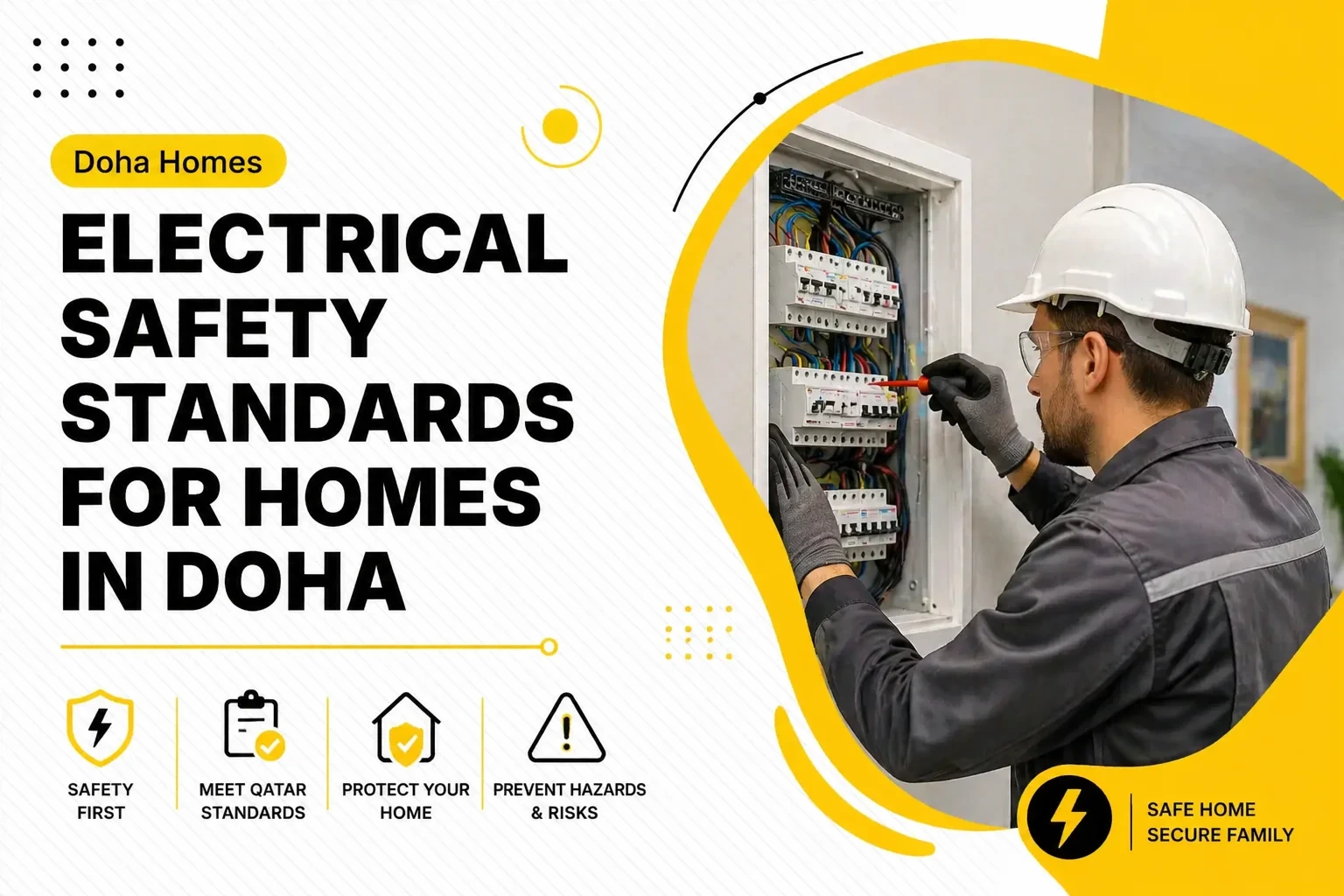
If you are getting ready to renovate your home in Qatar, the electrical work is the one area where you absolutely cannot afford to take shortcuts. Sticking to national standards is about more than just legal paperwork. It is about making sure your house can actually handle Doha’s brutal heat without the system failing. In a city where summer temperatures put massive pressure on the local power grid, these rules act as a shield for your family and your property. Choosing a reliable provider of Electrical Wiring Services in Doha from the very start makes every step of this process far smoother.
Maintaining your home’s compliance is more than just checking boxes. It protects your property’s future market value, keeps you eligible for government services, and guarantees the validity of your insurance.
In reality, the majority of domestic fires are caused by readily preventable factors, such as outdated wiring or circuits that were not built to withstand the high power demands of a modern home. You can manage your renovations confidently if you have a solid understanding of the Electrical Safety Code.
Understanding Load Distribution and Capacity
The first step in any electrical upgrade is to figure out the actual power demand of the property. In Qatar, managing how that energy is spread out is a critical part of the planning phase. If you add heavy-duty AC units or a high-end kitchen without adjusting your distribution, you are inviting frequent power trips and dangerous overheating.
Balancing Power for Home Renovations
Calculating your total energy needs to prevent overloads is a fundamental part of the design process. Every single socket, light, and appliance must be documented to find the “Total Connected Load.” This careful math ensures the main distribution board can handle the current without internal components melting or failing.
- Detailed Load Mapping:
Listing every power point to avoid straining the main supply line, since poorly mapped Power Points in Qatar are one of the most common causes of overloaded circuits during a renovation.
- Precision Phase Balancing:
Dividing the electrical weight across phases to meet Kahramaa regulations and stop voltage drops.
- Building in a Buffer:
Ensuring that at least 20% of your capacity is available for upcoming home theater or technology improvements.
When phases are properly balanced, one phase does not have to do all the work while the others do nothing. This type of imbalance causes the system to become inefficient and wears down your wires. Certified contractors use these exact numbers to properly size your breakers, which guarantees long-term dependability.
Managing your power usage properly also helps the wider community. It is a requirement under Kahramaa regulations to make sure your private home upgrades do not negatively impact the power quality of the surrounding neighborhood.
High-Performance Demand Management
Heavy machinery, like water heaters and central air conditioners, must adhere to extremely strict regulations in Doha. These devices draw massive amounts of current, which can quickly transform poor wiring into a fire hazard. Instead of sharing lines, these high-consumption items must sit on separate, independent circuits according to Kahramaa regulations. Getting the Split AC Placement right during this planning stage also matters, since poor positioning can strain the dedicated circuit and shorten the unit’s lifespan.
Maintaining stability according to Qatar Power Standards means making sure these dedicated lines have the right breaker ratings. This prevents the initial “surge” from an AC compressor from flickering your lights or frying sensitive electronics in other rooms. Each high-power unit also needs its own accessible isolator switch for emergency cut-offs. Ignoring this step is often behind the complaint that AC is not cooling properly even when the unit itself is in perfect working order.
Core Home Wiring Rules for Safety
Think of your wiring as the nervous system of your house. It is often tempting during a remodel to save money by reusing old cables, but that is a gamble that rarely pays off in the Middle East. Modern home wiring rules are built specifically to survive the punishing heat and humidity that define our local climate.
Correct Wiring Materials and Installation
The first step to a safe setup is to standardize the type and thickness of wires used in your house. Lighting typically requires 1.5mm wiring, but to be safe, power outlets need at least 2.5mm or 4.0mm. Heat is produced behind your walls when a wire is too thin for the load it is carrying.
- Conduit Protection:
Housing all cables inside high-quality PVC or GI pipes to keep out moisture and desert dust.
- Heat-Shielded Materials:
Use fire-retardant cables that fully comply with local wiring rules.
- Standardized Depth:
Making sure conduits are buried deep enough so you do not hit a wire when hanging a picture or a shelf.
Low-quality or old insulation can crack because of the ambient heat in Qatar. For this reason, house wiring regulations emphasize using premium copper with thick, UV-stabilized coatings. Homeowners should have trusted Repairs Services in Qatar on call instead of waiting for a problem to worsen because doing the job correctly the first time prevents a huge repair bill and a safety hazard later on.
Furthermore, you should never have unsecured cables dangling in spaces between walls. Every inch of wiring must be secured within a conduit. This makes it much easier to replace wires if a fault ever happens, and it is a hallmark of a professional, code-compliant renovation.
Identification and Safety Labeling
In Qatar, it is legally mandatory to use the appropriate wire colors to ensure the safety of repairs. Every home project must adhere to the same color scheme, which is Green/Yellow for Earth, Blue or Black for Neutral, and Brown or Red for Live. Any expert can enter your system and quickly understand it due to its consistency.
The reason clear labeling is mandatory under Kahramaa regulations becomes obvious during an emergency. Your Distribution Board (DB) needs to be marked perfectly. “Kitchen Sockets” should be prominently displayed so you would nott have to guess which switch to flip if a socket sparks in the kitchen.
Meeting the Electrical Safety Code
The real “brain” of your home’s safety system is the collection of devices in your breaker box designed to kill the power the second a fault is found. These components are the core of the Electrical Safety Code and represent some of the most important Electrical Safety Standards a homeowner in Qatar needs to understand. If you are fixing up an older home, swapping an old fuse box for a modern board should be your top priority, and looking into professional fuse box upgrade services early can save you from costly rework later.
Mandatory Safety Devices (ELCBs)
Using Earth Leakage Circuit Breakers (ELCBs) to prevent fire and electric shock is one of the most critical legal requirements. These devices “watch” for electricity leaking out, maybe through a damp wall or a person, and snap the power off in milliseconds to prevent injury.
- Trip Settings:
The standardized 30 mA trip sensitivity is used as dictated by the safety code.
- Regular Testing:
Pushing the manual “Test” button once a month to make sure the internal switches have not seized up.
- Smart Tripping:
Designing the system so only the faulty circuit goes dark, rather than the entire house.
A working ELCB is quite literally a lifesaver. Without one, a simple fault in a toaster could turn a kitchen counter into a death trap. The best proven safety code makes these devices mandatory, and they must be professionally tested after installation. It is worth noting that persistent AC noise problems can sometimes signal an underlying electrical fault rather than a mechanical one, which is another reason routine ELCB testing matters.
Earthing and Grounding Protocols
It is impossible to overestimate the importance of a secure earthing system in safeguarding your property. Instead of allowing stray energy to pass through your body, earthing offers a direct, low-resistance conduit into the actual ground. It is the final, silent line of defense required by the safety code.
To meet power standards in Qatar, your home must have a dedicated earth electrode, essentially a copper rod driven deep into the soil. An electrician has to test this system to make sure every metal light fixture and socket is properly linked to that rod. This is the most effective way to prevent fatal accidents during the humid months.
Getting Inspection and Connection Approval
You cannot just finish a renovation and flip the switch yourself. A formal “thumbs up” from the authorities is required for Doha’s ultimate connection to the city’s electricity system. Working with individuals who are knowledgeable in Kahramaa regulations makes navigating them much simpler.
Final Certification Steps
Hiring an authorized contractor is the law, not just a suggestion. Only technicians with a specific license can submit your electrical drawings to the government for review. They act as the official link between your private renovation project and the national power grid. Working with an established provider of Electrical Services in Doha at this stage ensures your paperwork and on-site work move forward together without delays.
The approval process for Kahramaa regulations involves proving your load is balanced and your wiring is up to code. This review occurs before the walls are closed, preventing you from wasting money on an unsafe design. Once everything is verified, you receive a Completion Certificate as proof of quality.
Preparing for Official Inspection
Checking your installation against the rules before power is turned on is the final hurdle. An official inspector may visit the site to test your insulation and the speed of your safety breakers. They are there to confirm that you have followed every part of the Electrical Safety Code exactly.
Ensuring the property meets all power standards in Qatar for final connection means your distribution boards must be easy to reach, perfectly labeled, and free of any exposed live parts. The inspector will check that you used the correct wire colors throughout the house. Keeping your work neat and strictly following the approved drawings will help you get your power turned on quickly.
Long-term Maintenance and Safety
Once the dust has settled and you have connected your power, the job is not over. The heat in Qatar puts a massive amount of stress on electrical parts. To stay compliant with Kahramaa regulations over the long term, you need to monitor your system’s health. Knowing the basics of power failure troubleshooting in Qatar can also help you tell the difference between a minor tripped breaker and a more serious fault that needs a professional visit.
- Yearly Audits:
Have a pro check your breaker box once a year to tighten any connections that loosened due to heat expansion.
- Thermal Checks:
Look for “hot spots” in your walls with an infrared camera. These could indicate a loose cable or a faulty connection.
- Swapping Old Parts:
Replace breakers that have become stiff or unresponsive over time.
One of Doha’s biggest enemies is dust. Your electrical panels may experience short circuits if sand gets inside. You can safeguard your pricey gadgets by keeping your electrical cabinets tidy and tightly sealed.
Conclusion
Compliance and safety go hand in hand. These precautions maintain your home functioning properly and shield your family from unexpected problems. And in any renovation work, only by prioritizing the Kahramaa regulations can a house be ensured to remain a safe and comfortable retreat from stormy weather. Whether you are adding an extra room or going for a full overhaul, getting it right now will keep your power on for the long haul.
Choosing quality materials and expert help is the best investment you can make in your property. In the long run, following Kahramaa regulations is the most cost-effective way to maintain a home in Doha.
When the wires and connections are all done to the highest possible standards, you can finally relax in your new space with the utmost peace of mind. Finally, staying aligned with these requirements ensures long-term reliability and keeps investments safe for years.
Ensure Your Home’s Safety with Expert Electrical Solutions in Doha
Protect your family and property with professional electrical safety inspections and services. Partner with Adonai Solutions today to ensure compliance, prevent hazards, and keep your home safe with reliable, expert care.
Frequently Asked Questions
What is the electrical standard in Qatar?
The national standard in Qatar follows a 240V voltage and 50Hz frequency. All electrical installations must align with strict Kahramaa regulations to ensure they can handle the heavy cooling loads required during the intense summer months. These standards are designed to harmonize residential power usage with the national grid’s capacity while prioritizing resident safety through mandatory grounding and standardized fuse requirements for every connected appliance in your home.
What are the general rules of residential wiring?
Residential wiring is governed by the requirement that all installations be performed by licensed professionals using heat-resistant, fire-retardant materials. A core principle of the Electrical Safety Code is the separation of high-demand appliances, like AC units, onto dedicated circuits to prevent dangerous overloads. Proper conduit protection and standardized wire coloring;typically brown for live and blue for neutral;are mandatory. These rules ensure that any future maintenance can be conducted safely and that the system remains stable under load.
Do energy-efficient improvements increase property value?
Yes, upgrading to high-efficiency systems significantly boosts market appeal and appraisal figures in the local real estate market. In a climate where cooling costs represent a large portion of monthly expenses, buyers view Qatar Power Standards as a benchmark for quality and long-term savings. Improvements like advanced insulation or VRF cooling systems can increase a property’s value by 10% or more. These upgrades transform a home into a “smart investment,” reducing operating costs while ensuring future regulatory compliance.
How do I find reliable contractors for energy efficiency improvements?
Finding the right partner involves verifying their licensing and past performance with high-load residential projects in the region. You should look for firms that specialize in home wiring rules and have a proven track record of optimizing building envelopes for heat resistance. Reliable contractors often provide detailed energy audits and performance-based savings guarantees. Adonai Solutions is a leading choice for homeowners, offering expert consulting and implementation for energy-saving measures that drastically reduce your monthly cooling bills.
How often should electrical maintenance be done?
For residential properties, a professional inspection is recommended at least once or twice a year to ensure system integrity. Regular checks are vital for identifying loose connections or “hot spots” caused by the thermal expansion of components in the desert heat. Maintaining your system according to the Electrical Safety Code prevents sudden power failures during peak usage. Periodic audits of your distribution board and safety breakers help catch minor faults before they become expensive or dangerous repair projects.
How can I ensure my renovation is fully compliant?
Achieving full compliance requires working with authorized experts who can navigate the complex approval processes for residential upgrades. Adonai Solutions helps homeowners by managing everything from initial safety audits to final permit acquisition, ensuring your project meets all Kahramaa regulations. Their team provides professional wiring, panel upgrades, and energy optimization services designed specifically for the Middle Eastern climate. Partnering with them guarantees that your renovation is not only high-quality but also fully documented for future resale and insurance purposes.